The Short Answer
Yes — in most cases, farmers need a Waste Transfer Note when commercial or industrial waste leaves their land and is collected by a registered waste carrier. But agriculture has several important exemptions that do not apply to other industries, and understanding where the line sits is critical for staying compliant without unnecessary paperwork.
This guide covers when a WTN is legally required on a farm, what exemptions apply, which EWC codes are most commonly used for agricultural waste, and what changes under Digital Waste Tracking from October 2026.
When Farmers Do Need a Waste Transfer Note
Under Section 34 of the Environmental Protection Act 1990, a Waste Transfer Note is required whenever non-hazardous controlled waste changes hands between a producer and a registered waste carrier. This applies to farms when:
- A licensed waste carrier collects scrap metal from your farm (old machinery, fencing, roofing)
- A carrier collects waste tyres — agricultural tyres are not exempt from Duty of Care
- A carrier removes waste oils — engine oil, hydraulic fluid, or other machinery lubricants
- A carrier removes pesticide or chemical containers — these are often hazardous and may require a Hazardous Waste Consignment Note rather than a standard WTN
- A carrier takes waste plastics — silage wrap, fertiliser bags, netting — that cannot be burned on-farm
- A carrier removes general farm trade waste — packaging, office waste, building materials from farm structures
In all these cases, the farmer acts as the waste producer (Part A of the WTN), and the carrier completes Part B. The receiving site completes Part C. All three parties must sign.
When Farmers Are Exempt from WTNs
Agriculture has specific exemptions that reduce the paperwork burden for genuinely agricultural waste streams:
Waste from agricultural premises used in agriculture Under the Environmental Protection Act 1990 and supporting regulations, waste that is both produced on agricultural land and used or disposed of on the same agricultural land does not require a WTN. This covers:
- Manure and slurry spread on your own land as a soil improver under the Nitrates Regulations
- Crop residues ploughed back into the soil or composted on-farm
- Waste soil and subsoil moved within the same agricultural holding
- Animal carcasses collected by an approved knackery or hunt kennel under the Animal By-Products Regulations — these are governed by separate legislation, not the Duty of Care regime
The key rule: if the waste stays on your farm and is managed on your farm, a WTN is generally not required. The moment it leaves your land with a third party, Duty of Care applies and a WTN is needed.
The Farm Exemptions That Catch Farmers Out
Burning waste on-farm Open burning of agricultural waste is controlled separately under the Environmental Permitting Regulations. You can burn clean straw, stubble, and some crop residues under specific conditions — but burning waste plastics, treated timber, or tyres is illegal regardless of location. Waste that cannot be legally burned must leave the farm with a carrier and a WTN.
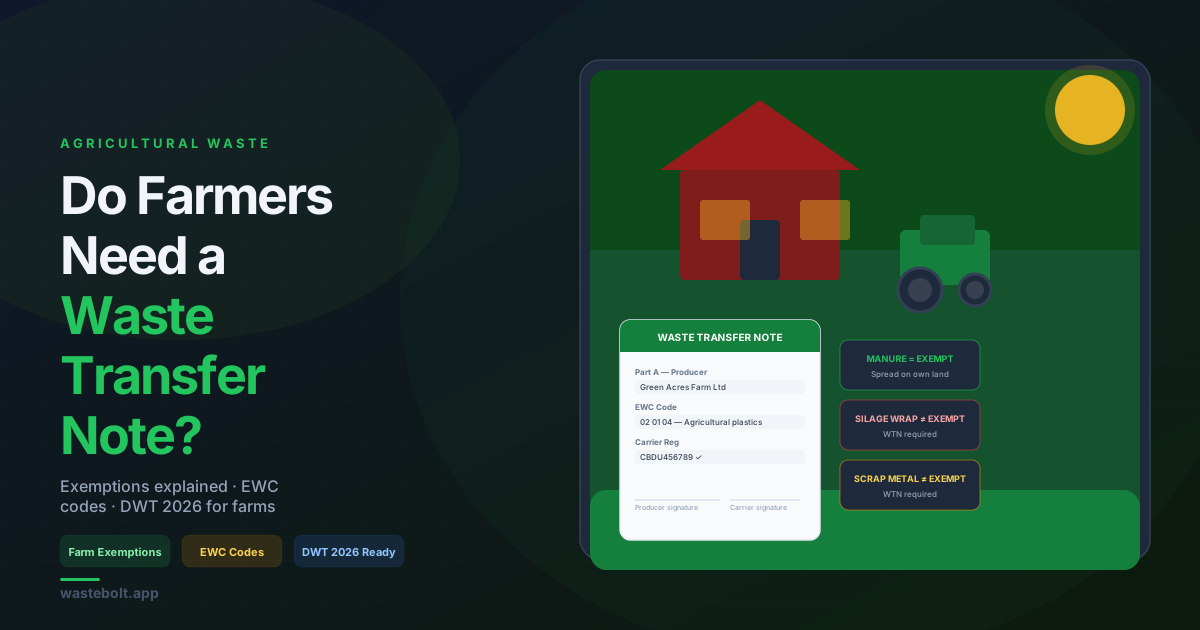
Silage wrap and agricultural plastics Silage wrap cannot be burned and is not covered by agricultural exemptions when it leaves the farm. When a plastics recycler or waste carrier collects your silage wrap, a WTN is required. EWC code: 02 01 04 (waste plastics from agriculture, excluding packaging).
Asbestos in farm buildings Many older farm buildings contain asbestos cement sheeting. Removal and disposal requires a licensed contractor, a Hazardous Waste Consignment Note (not a standard WTN), and disposal at a licensed hazardous waste facility. The agricultural exemption does not apply to hazardous waste.
Fallen stock Dead animals must be disposed of by a registered animal by-products operator. This is not covered by WTNs — it is governed by the Animal By-Products Regulations 2011 and requires different documentation.
EWC Codes Commonly Used on Farms
Getting the EWC code right is the most common compliance mistake on farm WTNs. Use our EWC code lookup tool to verify any code you are unsure about.
| Waste type | EWC code | Hazardous? |
|---|---|---|
| Animal manure and slurry | 02 01 06 | No |
| Agricultural plastics (silage wrap, bags) | 02 01 04 | No |
| Waste agrochemicals / pesticides | 02 01 08 | Yes — HWCN required |
| Pesticide containers | 15 01 10* | Yes — HWCN required |
| Scrap metal (machinery, fencing) | 17 04 05 | No |
| Waste engine / hydraulic oil | 13 02 05* | Yes — HWCN required |
| Waste tyres | 16 01 03 | No |
| Mixed farm trade waste | 02 01 99 | No |
| Asbestos cement | 17 06 01* | Yes — HWCN required |
| Waste batteries | 16 06 01* | Yes — HWCN required |
Codes marked with an asterisk (*) are hazardous — these require a Hazardous Waste Consignment Note, not a standard WTN. See our complete guide to Hazardous Waste Consignment Notes for the additional requirements.
What DWT 2026 Means for Farms
The mandatory Digital Waste Tracking (DWT) system launching in October 2026 primarily affects waste receiving sites in phase one — transfer stations, recyclers, composting facilities, and landfills. Farms acting as waste producers are not required to submit to the DWT platform in the first phase.
However, the receiving sites that collect your farm waste will need to record the movement digitally. This means your waste carrier and the receiving facility will need accurate WTN data from you — EWC codes, waste descriptions, quantities — in a format that feeds into the DWT system cleanly.
Farms that have already moved to digital WTNs will find this transition seamless. Those still using paper notes will face pressure from their carriers and receiving sites to provide better data as the October 2026 deadline approaches.
Practical Steps for Farmers
1. Identify which waste streams leave your farm with a carrier Make a list of every type of waste collected by a third party. For each one, check whether it falls under an agricultural exemption or requires a WTN.
2. Verify your carrier is registered Before any waste leaves your farm, check the carrier's registration on the EA public register. An unregistered carrier means the transfer is non-compliant — and liability falls on you as the producer, not the carrier.
3. Use the correct EWC code Use the table above or our EWC code lookup tool to identify the correct 6-digit code. If the correct code has an asterisk, you need a Hazardous Waste Consignment Note, not a standard WTN.
4. Keep copies for at least 2 years England, Wales and Northern Ireland require a minimum 2-year retention period. Scotland requires 3 years. Digital storage means you can retrieve any note instantly during an inspection.
Frequently Asked Questions
Does a farmer need a waste carrier licence? Only if the farmer is transporting their own waste off-farm themselves. If a registered third-party carrier collects it, the farmer does not need a waste carrier licence — but the carrier's registration must be verified before the transfer.
Is manure a controlled waste? Manure spread on agricultural land as a soil improver is generally exempt from Duty of Care controls. Manure transported off-farm for use on third-party land may require a WTN depending on circumstances. Manure taken to a biogas or AD plant requires a WTN — EWC code 02 01 06.
Do I need a WTN for silage wrap collection? Yes. Silage wrap collected by a plastics recycler or waste carrier requires a WTN. It is not covered by agricultural exemptions because it is leaving the farm with a third party. Use EWC code 02 01 04.
What if I burn my waste on-farm instead? You can burn clean crop residues and straw under specific conditions. Burning plastics, treated timber, tyres, or chemical containers is illegal. Waste that cannot legally be burned must leave with a registered carrier and a WTN.
Last updated: June 2026. Covers England, Wales, Scotland, and Northern Ireland. Legislation: Environmental Protection Act 1990 · Environmental Permitting Regulations 2016 · Animal By-Products Regulations 2011.