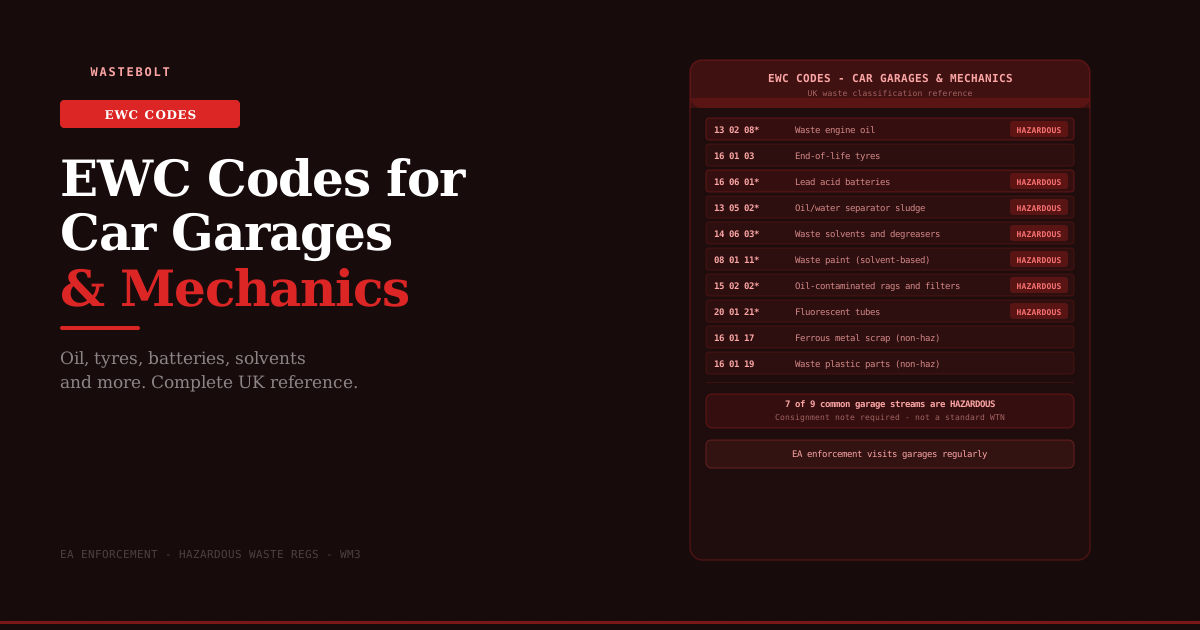
EWC Codes for Car Garages — Why This Matters
Car garages, MOT centres, bodyshops, and independent mechanics generate some of the most consistently hazardous waste streams of any small business in the UK. Waste oil, batteries, solvents, contaminated rags, and paint residues are all regulated under the Hazardous Waste Regulations 2005 — yet many garages document these incorrectly, using a standard Waste Transfer Note when a Hazardous Waste Consignment Note is legally required.
The Environment Agency conducts regular enforcement visits to garages. Incorrect EWC codes and missing or inadequate consignment notes are among the most common compliance failures found.
This guide covers every significant waste stream a car garage will generate, the correct EWC code for each, whether it's hazardous, and what documentation it requires.
Tip: Not sure which EWC code applies to a specific waste stream? Use our free EWC Code List & Search Tool to search the full UK Waste Classification system by keyword or code.
A Critical Point Before You Start: Most Garage Waste Is Hazardous
Unlike construction or domestic waste where the majority of streams are non-hazardous, the reverse is true for garages. Of the most common waste types produced by car garages, the majority carry an asterisk (*) in the EWC catalogue — meaning they are classified as hazardous and require a Hazardous Waste Consignment Note, not a standard WTN.
In Northern Ireland, hazardous waste is notifiable waste under the Controlled Waste Regulations (Northern Ireland) 2002 — the documentation requirements are equivalent.
Hazardous waste cannot be mixed with non-hazardous waste. It must be stored separately, collected by a carrier licensed for hazardous waste, and sent to a facility with a permit to accept the specific hazardous waste type.
Waste Engine Oil and Lubricants
EWC 13 02 08 — Other engine, gear and lubricating oils*
This is the highest-volume hazardous waste stream for most garages. All waste mineral oil — engine oil, gearbox oil, differential fluid, hydraulic fluid — falls under Chapter 13 of the EWC (oil wastes).
Hazardous: Yes — mineral oils are classified hazardous due to their HP 5 (specific target organ toxicity) and HP 14 (ecotoxic) properties.
Specific codes within Chapter 13:
- 13 02 04* — chlorinated mineral-based engine, gear and lubricating oils
- 13 02 05* — non-chlorinated mineral-based engine, gear and lubricating oils
- 13 02 06* — synthetic engine, gear and lubricating oils
- 13 02 08* — other engine, gear and lubricating oils (the catch-all for mixed or unspecified mineral oils)
For most garages collecting mixed used oil from sumps, 13 02 08* is the correct code.
Documentation: Hazardous Waste Consignment Note required for every collection. The carrier must hold an Upper Tier waste carrier registration. The receiving site must hold a permit for waste oil treatment or recovery.
Practical note: Waste oil collection is typically handled by specialist oil recycling contractors. Many offer free collection above certain volumes because the oil has recovery value. Ensure you receive a completed consignment note for every collection.
Waste Tyres
EWC 16 01 03 — End-of-life tyres
Hazardous: No — tyres are non-hazardous under the EWC.
This is one of the few major garage waste streams that is not hazardous. End-of-life tyres are classified under Chapter 16 (wastes not otherwise specified) at 16 01 03.
Documentation: Standard Waste Transfer Note required. The carrier needs a waste carrier registration (Lower or Upper Tier). The receiving site must be authorised to accept tyres — typically a tyre shredding or retreading facility.
Volume considerations: Garages generating more than a certain volume of tyres may be subject to producer responsibility obligations under the Waste Tyres Regulations. Check current thresholds with the EA.
Batteries
EWC 16 06 01 — Lead-acid batteries*
Hazardous: Yes — lead-acid batteries contain sulphuric acid (HP 8, corrosive) and lead (HP 6, toxic; HP 14, ecotoxic).
Lead-acid vehicle batteries are the most common battery type in garages. They are classified as hazardous.
Other battery codes relevant to garages:
- 16 06 02* — Ni-Cd batteries (hazardous)
- 16 06 03* — Mercury-containing batteries (hazardous)
- 16 06 04 — Alkaline batteries (non-hazardous, e.g. AA/AAA from key fobs)
- 16 06 05 — Other batteries and accumulators (non-hazardous)
Documentation: Hazardous Waste Consignment Note required for lead-acid batteries. Battery waste is also subject to producer responsibility regulations — batteries must be sent to an approved battery treatment facility.
Practical note: Battery recycling contractors typically collect for free as the lead content has recovery value. Always get a consignment note.
Oil/Water Separator Sludge
EWC 13 05 02 — Sludges from oil/water separators*
Hazardous: Yes — oil/water separator sludge contains hydrocarbons at concentrations that make it hazardous under HP 5, HP 6, and HP 14.
Most garages with a forecourt or workshop wash-down area are required to have an oil/water interceptor or separator. The accumulated sludge from these separators must be collected by a specialist contractor.
Related codes:
- 13 05 01* — Solids from grit chambers and oil/water separators
- 13 05 03* — Interceptor sludges
Documentation: Hazardous Waste Consignment Note required. The contractor must hold an appropriate licence. Separator cleaning should be carried out at intervals recommended by the manufacturer or your environmental permit conditions — check your permit.
Solvents and Degreasers
EWC 14 06 03 — Other solvents and solvent mixtures*
Hazardous: Yes — solvents are hazardous under HP 3 (flammable), HP 4 (irritant), HP 5 (STOT), and often HP 6 (acute toxicity).
Brake cleaner, carburettor cleaner, parts washing solvents, and degreasing agents are all within this category once they become waste.
Specific codes:
- 14 06 01* — Chlorofluorocarbons, HCFCs, HFCs
- 14 06 02* — Other halogenated solvents and solvent mixtures
- 14 06 03* — Other solvents and solvent mixtures (most common for general garage solvents)
Documentation: Hazardous Waste Consignment Note required. Quantities must be tracked — garages generating significant volumes may need to pre-notify movements in certain circumstances.
Waste Paint and Refinishing Materials
EWC 08 01 11 — Waste paint and varnish containing organic solvents or other hazardous substances*
Hazardous: Yes — solvent-based paints are hazardous under HP 3 (flammable), HP 4, and HP 5.
For bodyshops and garages carrying out paintwork, this is a significant waste stream. Solvent-based paint residues, hardeners, thinners, and mixed paint waste are all hazardous.
08 01 12 — Waste paint and varnish other than those mentioned in 08 01 11 (non-hazardous — water-based paint, once dried/solidified).
Documentation: Solvent-based paint waste requires Hazardous Waste Consignment Note. Dried water-based paint can be disposed of as non-hazardous with a standard WTN.
Practical note: Mixed paint residues from spray guns and mixing containers should be treated as hazardous even if individual components were not. The mixture may exhibit hazardous properties that individual components did not.
Contaminated Rags, Filters, and Absorbents
EWC 15 02 02 — Absorbents, filter materials (including oil filters not otherwise specified), wiping cloths, protective clothing contaminated by hazardous substances*
Hazardous: Yes — oil-contaminated rags and filters are hazardous due to their hydrocarbon content (HP 5, HP 14).
This is one of the most commonly misclassified waste streams in garages. Oily rags, used oil filters, contaminated absorbent granules (the stuff used to soak up oil spills on the workshop floor), and used disposable overalls contaminated with oil or solvent are all classified as hazardous.
15 02 03 — Absorbents, filter materials, wiping cloths, protective clothing other than those mentioned in 15 02 02 (non-hazardous — uncontaminated versions of the same materials).
Documentation: Hazardous Waste Consignment Note required for oil-contaminated rags and filters. They must be stored in sealed containers away from non-hazardous waste.
Fluorescent Tubes and Low-Energy Bulbs
EWC 20 01 21 — Fluorescent tubes and other mercury-containing waste*
Hazardous: Yes — fluorescent tubes contain mercury, classified as HP 6 (acute toxicity) and HP 14 (ecotoxic).
Garage workshops commonly use fluorescent strip lighting. When tubes are replaced, they must be disposed of as hazardous waste — not in the general skip or bin.
Documentation: Hazardous Waste Consignment Note required, even for small quantities.
Practical note: Many electrical wholesalers and lamp recycling schemes offer take-back arrangements for fluorescent tubes. These are typically covered under a producer responsibility scheme and the scheme operator handles the consignment note documentation.
Scrap Metal from Vehicles
EWC 16 01 17 — Ferrous metals EWC 16 01 18 — Non-ferrous metals
Hazardous: No — clean scrap metal from vehicles is non-hazardous.
Removed exhaust systems, engine blocks (drained and cleaned), body panels, and suspension components are non-hazardous scrap metal.
Important caveat: Parts must be free of fluids. An engine block still containing oil is not clean scrap metal — it needs to be drained first, with the waste oil handled separately as 13 02 08*.
Documentation: Standard Waste Transfer Note required. Scrap metal dealers must hold a valid Scrap Metal Dealer licence in addition to a waste carrier registration.
Waste Plastic Parts
EWC 16 01 19 — Plastics
Hazardous: No — plastic vehicle components (bumpers, trim, dashboards) are non-hazardous.
Documentation: Standard Waste Transfer Note required.
End-of-Life Vehicles (ELVs)
EWC 16 01 06 — End-of-life vehicles, containing neither liquids nor other hazardous components EWC 16 01 04* — Waste vehicles (if still containing hazardous components)
If you are an Authorised Treatment Facility (ATF) for ELVs, you must hold a specific environmental permit. ELVs must be depolluted — all fluids, batteries, and hazardous components removed — before the shell becomes 16 01 06 (non-hazardous).
A vehicle that has not been fully depolluted is 16 01 04* (hazardous). This distinction matters for both documentation and the receiving site requirements.
General Workshop Waste
EWC 16 02 14 — Discarded equipment other than those mentioned in 16 02 09 to 16 02 13
Small electrical equipment, worn tools, and general workshop equipment that doesn't fit a more specific code can use this non-hazardous classification.
EWC 20 03 01 — Mixed municipal waste
General office and canteen waste from the garage — packaging, food waste, paper — is 20 03 01 (non-hazardous).
EWC Code Quick Reference for Garages
| Waste Type | EWC Code | Hazardous? | Document Required |
|---|---|---|---|
| Waste engine/gear/lubricating oil | 13 02 08* | Yes | Consignment Note |
| Oil/water separator sludge | 13 05 02* | Yes | Consignment Note |
| Waste solvents and degreasers | 14 06 03* | Yes | Consignment Note |
| Solvent-based paint waste | 08 01 11* | Yes | Consignment Note |
| Oil-contaminated rags and filters | 15 02 02* | Yes | Consignment Note |
| Lead-acid batteries | 16 06 01* | Yes | Consignment Note |
| Fluorescent tubes | 20 01 21* | Yes | Consignment Note |
| End-of-life tyres | 16 01 03 | No | WTN |
| Scrap ferrous metal (drained) | 16 01 17 | No | WTN |
| Scrap non-ferrous metal | 16 01 18 | No | WTN |
| Waste plastic parts | 16 01 19 | No | WTN |
| General workshop waste | 20 03 01 | No | WTN |
EA Enforcement and Garages
The Environment Agency targets garages in enforcement activity because they know the waste streams are predominantly hazardous and non-compliance is common. Typical EA enforcement visit findings at garages include:
- Standard WTNs used for waste oil (should be consignment notes)
- Oil-contaminated rags disposed of in the general skip
- Batteries stored without appropriate containment
- Oil stored in unlabelled or unsuitable containers
- No documentation at all for hazardous waste movements
Penalties range from fixed penalty notices through to prosecution with unlimited fines. Repeat offenders face permit revocation for permitted sites.
The simplest way to demonstrate compliance during an EA visit is to be able to produce a complete consignment note for every hazardous waste movement in the last 3 years, on demand, in seconds. That's what digital compliance records in Wastebolt provide.
Frequently Asked Questions
Do I need a waste carrier licence to take my own waste oil to a recycling centre? If you're transporting your own waste oil as a result of your garage business, you need at minimum a Lower Tier waste carrier registration. However, waste oil is hazardous — most local recycling centres do not accept hazardous waste from commercial premises. You almost certainly need a specialist oil collection contractor with an Upper Tier licence.
Can I mix waste oil with other liquids before collection? No. Mixing waste oil with other waste streams — particularly with solvents or antifreeze — can create a new hazardous waste mixture that is harder and more expensive to treat. Keep different liquid waste streams separate.
What if I only change a few cars' oil per week — does it still need a consignment note? Yes. There is no minimum quantity threshold for the consignment note requirement. Even a small quantity of waste oil (say, 5 litres from a single service) is hazardous waste requiring a consignment note.
What should I do if I'm not sure whether a waste is hazardous? Use the UK Waste Classification Technical Guidance (WM3) published by the Environment Agency, or consult a licensed waste contractor. The WM3 guidance is free to access online. When in doubt, treat the waste as hazardous — the consequences of misclassifying hazardous waste as non-hazardous are far more serious than the reverse.
Does DWT 2026 apply to garages? Phase 1 (October 2026) applies to permitted waste receiving sites. Most garages are not permitted receiving sites — they generate waste but don't receive it commercially. The DWT mandate will extend to carriers and producers in later phases from around October 2027. However, the receiving sites that accept your waste oil and batteries will be DWT-compliant from October 2026, and may require more structured data on incoming waste.
Last updated: May 2026. EWC codes correct as of May 2026 — refer to the UK Waste Classification Technical Guidance (WM3) for the most current classifications. Legal basis: Hazardous Waste (England and Wales) Regulations 2005 · Environmental Protection Act 1990.