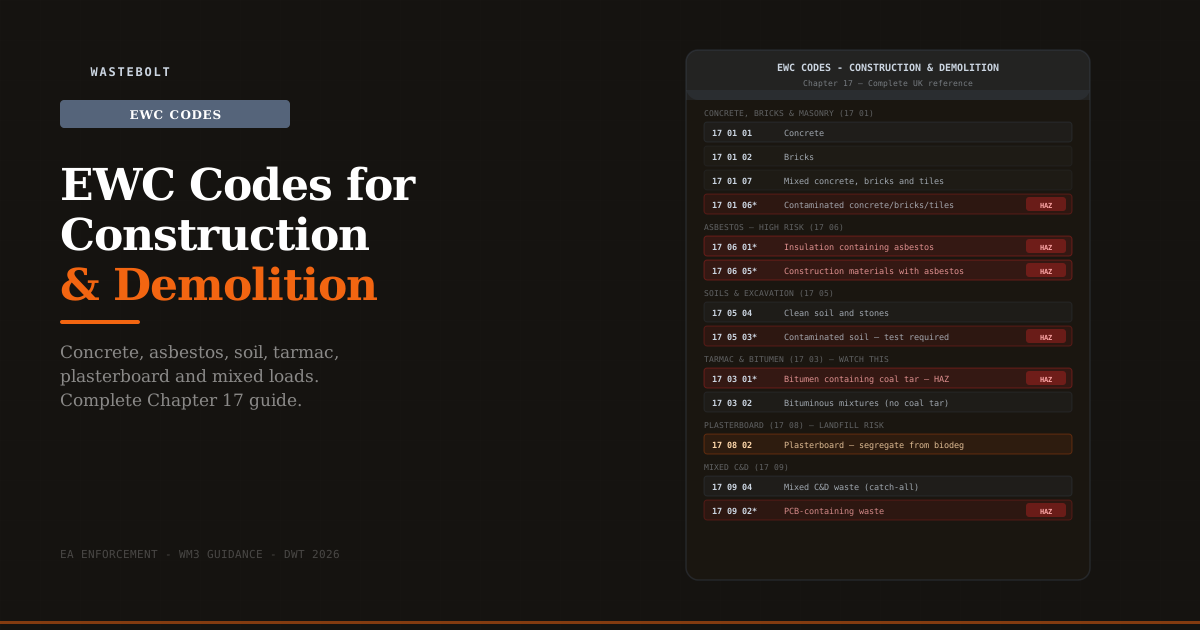
EWC Codes for Construction and Demolition — Why Getting This Right Matters
Construction and demolition waste accounts for around 60% of all controlled waste generated in the UK. Every load leaving a building site, every demolition skip, every excavation wagon needs a Waste Transfer Note with the correct six-digit EWC code.
C&D is also one of the most heavily enforced sectors. The Environment Agency targets construction sites because the waste volumes are high, the hazardous streams are common (asbestos, contaminated soil, coal tar asphalt), and non-compliance is widespread. Incorrect EWC codes on WTNs are one of the most frequent findings during EA site visits.
This guide covers every EWC code in Chapter 17 of the UK Waste Classification system — the entire C&D chapter — with practical guidance on classification decisions, the hazardous streams that catch sites out, and what documentation each waste type requires.
Tip: Not sure which EWC code applies to a specific waste stream? Use our free EWC Code List & Search Tool to search the full UK Waste Classification system by keyword or code.
Chapter 17 — The C&D EWC Code Structure
Chapter 17 of the European Waste Catalogue covers all construction and demolition waste. It is divided into sub-chapters by material type:
- 17 01 — Concrete, bricks, tiles and ceramics
- 17 02 — Wood, glass and plastic
- 17 03 — Bituminous mixtures and tar
- 17 04 — Metals and alloys
- 17 05 — Soil, stones and dredging spoil
- 17 06 — Insulation materials and asbestos-containing materials
- 17 08 — Gypsum-based construction materials
- 17 09 — Mixed construction and demolition wastes
17 01 — Concrete, Bricks, Tiles and Ceramics
17 01 01 — Concrete
Hazardous: No
Clean concrete from demolition or construction — broken slabs, foundations, structural concrete — is non-hazardous. This is one of the highest-volume C&D waste streams and has good recycling routes via concrete crushing plants.
Use 17 01 01 when: The load is predominantly clean concrete with no significant contamination from paint, asbestos, chemical treatments, or hazardous coatings.
Documentation: Standard Waste Transfer Note.
17 01 02 — Bricks
Hazardous: No
Demolition brickwork — whole or crushed — from standard construction. Clean reclaimed bricks can often be sold rather than disposed of. Where they're being moved as waste, 17 01 02 applies.
Documentation: Standard Waste Transfer Note.
17 01 03 — Tiles and Ceramics
Hazardous: No
Floor tiles, roof tiles, wall tiles, and bathroom ceramics from renovation or demolition. Clay drainage pipes are also included here.
Watch out for: Older floor tiles (pre-1980s) may contain asbestos fibres — particularly vinyl floor tiles. If there is any doubt, treat as potentially hazardous and test before classification.
Documentation: Standard Waste Transfer Note.
17 01 07 — Mixtures of Concrete, Bricks, Tiles and Ceramics
Hazardous: No
This is the most commonly used code for general demolition rubble — the mixed mineral material that typically fills a rubble skip. Where the load contains a genuine mix of concrete, brick, and tile that hasn't been separated, 17 01 07 is correct.
17 01 07 vs 17 09 04: Both are non-hazardous mixed C&D codes. The difference is material composition. 17 01 07 is specifically for mixed mineral/masonry material. 17 09 04 is the broader catch-all including timber, metal, and other C&D components. If the rubble skip contains only masonry materials, 17 01 07 is more precise. If it contains timber, plasterboard, metal and rubble mixed together, 17 09 04 is correct.
Documentation: Standard Waste Transfer Note.
17 01 06* — Mixtures of or Separate Fractions of Concrete, Bricks, Tiles and Ceramics Containing Hazardous Substances
Hazardous: Yes
Where masonry materials are contaminated with hazardous substances — paint containing lead or other hazardous compounds, chemical treatments, or significant hydrocarbon contamination — the hazardous variant applies.
Documentation: Hazardous Waste Consignment Note required.
17 02 — Wood, Glass and Plastic
17 02 01 — Wood
Hazardous: No
Untreated or minimally treated timber from construction and demolition — structural timber, joinery, floorboards, roof timbers, formwork, pallets.
Critical distinction — treated timber: Wood treated with preservatives containing arsenic (CCA — Copper Chrome Arsenic), creosote, or other hazardous chemicals is 17 02 04* (hazardous). This includes:
- Old telegraph poles and railway sleepers
- Pre-1990s fence posts
- Older agricultural buildings with preserved timber
- Any timber with green, brown, or oily chemical treatment of unknown type
If you cannot confirm the treatment is non-hazardous, default to 17 02 04*.
Documentation: Standard WTN for 17 02 01. Hazardous Consignment Note for 17 02 04*.
17 02 02 — Glass
Hazardous: No
Window glass, glazing units, glass blocks from construction and demolition. Does not include fluorescent tubes (20 01 21*) or specialist glass containing hazardous substances.
Note on double glazing units: Older sealed double glazing units may contain PCBs in the sealant — particularly units manufactured before 1990. Where this is suspected, classify as 17 09 02* (PCB-containing waste).
Documentation: Standard Waste Transfer Note.
17 02 03 — Plastic
Hazardous: No
Plastic components from construction — pipework, sheeting, fittings, guttering, fascia boards, damp proof membranes.
Documentation: Standard Waste Transfer Note.
17 02 04* — Glass, Plastic and Wood Containing or Contaminated with Hazardous Substances
Hazardous: Yes
The hazardous variant covering treated timber (see above), glass containing hazardous substances, and plastic contaminated with hazardous chemicals.
Documentation: Hazardous Waste Consignment Note required.
17 03 — Bituminous Mixtures and Tar — The Misclassification Trap
This sub-chapter contains one of the most commonly misclassified waste streams in construction: tarmac and asphalt planings.
17 03 01* — Bituminous Mixtures Containing Coal Tar
Hazardous: Yes — and widely misclassified as non-hazardous
Coal tar was used extensively in road surfacing and bituminous products until the 1980s. Asphalt and tarmac planings from roads surfaced before approximately 1985 frequently contain coal tar at concentrations that make them hazardous under the EWC.
Coal tar contains polycyclic aromatic hydrocarbons (PAHs) — classified as HP 7 (carcinogenic). The threshold for hazardous classification is a PAH concentration above 1,000 mg/kg.
The problem: Old tarmac looks identical to non-hazardous tarmac. Without testing, you cannot tell which you have. Sites incorrectly classifying 17 03 01* material as 17 03 02 (non-hazardous) and sending it to standard recycling or landfill are committing a serious offence — and the receiving site may also be in breach of their permit.
Best practice: Test asphalt planings and milled tarmac from any road or surface that may pre-date 1985 before classification. Specialist PAH testing is available from environmental testing laboratories and costs far less than the regulatory consequences of misclassification.
Documentation: Hazardous Waste Consignment Note for 17 03 01*.
17 03 02 — Bituminous Mixtures Other Than Those Mentioned in 17 03 01
Hazardous: No
Modern asphalt and tarmac planings from roads constructed or resurfaced post-1985, where testing confirms PAH concentrations are below hazardous thresholds.
Documentation: Standard Waste Transfer Note — but only after testing or verified post-1985 origin.
17 03 03* — Coal Tar and Tarred Products
Hazardous: Yes
Pure coal tar, pitch, and tarred products. Less common as a direct waste stream on modern sites, but may be encountered during demolition of older industrial and infrastructure assets.
Documentation: Hazardous Waste Consignment Note.
17 04 — Metals and Alloys
All metals from construction and demolition are classified within 17 04. The non-hazardous codes are:
| Code | Metal Type |
|---|---|
| 17 04 01 | Copper, bronze, brass |
| 17 04 02 | Aluminium |
| 17 04 03 | Lead |
| 17 04 04 | Zinc |
| 17 04 05 | Iron and steel (the highest volume — structural steel, rebar, pipes) |
| 17 04 06 | Tin |
| 17 04 07 | Mixed metals |
| 17 04 11 | Cables (non-hazardous) |
Note on lead: Lead flashing, pipes, and sheet are classified 17 04 03 (non-hazardous as a metal). However, lead paint on surfaces, or materials heavily contaminated with lead compounds, may need a different classification — discuss with your waste contractor.
Hazardous metal codes:
- 17 04 09* — Metal waste contaminated with hazardous substances
- 17 04 10* — Cables containing oil, coal tar, or other hazardous substances
Documentation: Standard WTN for all 17 04 0x non-hazardous codes. Hazardous Consignment Note for 17 04 09* and 17 04 10*.
Scrap metal dealers collecting from C&D sites must hold a Scrap Metal Dealer licence in addition to a waste carrier registration.
17 05 — Soil, Stones and Dredging Spoil — The Contamination Decision
Soil and excavation material is one of the most significant and highest-risk waste streams on construction sites. The classification decision — clean or contaminated — has major cost implications and legal consequences if got wrong.
17 05 04 — Soil and Stones Other Than Those Mentioned in 17 05 03
Hazardous: No
Clean excavated soil, subsoil, and stones from sites with no history of industrial use, contamination, or hazardous material storage. This is the starting assumption for greenfield excavation.
When 17 05 04 is appropriate:
- Confirmed greenfield land with no contamination history
- Sites where pre-construction ground investigation has confirmed clean status
- Agricultural land without known contamination
Documentation: Standard Waste Transfer Note. Note that significant quantities of excavated soil may qualify for exemption from waste classification as "uncontaminated excavated material" reused in construction — check the specific exemption criteria with the EA.
17 05 03* — Soil and Stones Containing Hazardous Substances
Hazardous: Yes
Excavated material from sites with contamination — former industrial sites, petrol stations, dry cleaners, gas works, landfills, military sites, and many other brownfield locations.
The testing requirement: You cannot classify soil as 17 05 04 (clean) simply by visual inspection. Where the site history creates any possibility of contamination, soil testing is required. Phase II ground investigation with chemical analysis is the standard approach.
Contaminants that commonly make excavated soil hazardous include:
- Total petroleum hydrocarbons (TPH) from petrol stations and fuel storage
- Heavy metals (lead, arsenic, chromium, nickel) from industrial processes
- PAHs from gas works, coking plants, and old road surfaces
- Solvents from dry cleaning and manufacturing
- Asbestos fibres in fill material
Documentation: Hazardous Waste Consignment Note. Hazardous contaminated soil must go to a permitted hazardous waste treatment or disposal facility — not a standard inert landfill or soil recycling site.
17 05 06 — Dredging Spoil (Non-Hazardous)
17 05 05* — Dredging Spoil Containing Hazardous Substances
Apply to material dredged from watercourses during construction or infrastructure works. Classification follows the same contamination assessment principle as excavated soil.
17 06 — Insulation and Asbestos — The Highest-Risk C&D Streams
Asbestos is the most serious hazardous waste stream encountered in construction and demolition. It is present in a wide range of materials in buildings constructed before 2000 and must be handled and documented with extreme care.
17 06 01* — Insulation Materials Containing Asbestos
Hazardous: Yes — extremely high risk
Amosite (brown asbestos) and crocidolite (blue asbestos) pipe lagging, thermal insulation, and cavity insulation. These are the highest-risk asbestos types and most likely to be encountered in older plant rooms, boiler houses, and industrial buildings.
Documentation: Hazardous Waste Consignment Note required. Must be collected by a licensed asbestos waste contractor. Must be disposed of at a permitted asbestos waste facility — typically a licensed asbestos cell at an appropriate landfill.
17 06 03* — Other Insulation Materials Consisting of or Containing Hazardous Substances
Hazardous: Yes
Insulation materials other than asbestos that contain or are contaminated with hazardous substances. Less common but encountered in specialist industrial contexts.
17 06 04 — Insulation Materials Other Than Those Mentioned in 17 06 01 and 17 06 03
Hazardous: No
Mineral wool (rockwool, glasswool), EPS (expanded polystyrene), PIR/PUR foam boards — standard modern insulation materials that do not contain asbestos or other hazardous substances.
Note on HBCD: Expanded polystyrene insulation (EPS) manufactured before approximately 2016 may contain hexabromocyclododecane (HBCD) — a regulated POP. EPS insulation from pre-2016 buildings should be treated as HP POP waste. See the POPs in waste guide for detail.
Documentation: Standard WTN for 17 06 04 (without HBCD). Hazardous Consignment Note if HBCD content above Annex IV limits.
17 06 05* — Construction Materials Containing Asbestos
Hazardous: Yes
Asbestos-cement products — corrugated roofing sheets, gutters, downpipes, flat sheets, and textured coatings (artex). This is chrysotile (white asbestos) — less dangerous than the types covered by 17 06 01* but still classified as hazardous.
Asbestos cement is the most frequently encountered asbestos-containing material (ACM) in UK demolition. It is present in vast numbers of pre-2000 agricultural buildings, garages, commercial premises, and industrial buildings.
Documentation: Hazardous Waste Consignment Note required. Licensed asbestos waste contractor required for collection and disposal.
The skip problem: Asbestos-containing material must never be placed in a general skip. If ACM is discovered in a skip after collection, do not tip the load — contact a licensed asbestos contractor immediately.
17 08 — Gypsum-Based Construction Materials
17 08 02 — Gypsum-Based Construction Materials
Hazardous: No — but with a critical landfill restriction
Plasterboard, plaster, gypsum blocks, and other gypsum-based construction materials. Plasterboard is non-hazardous in itself, but it causes a significant problem at landfill.
The hydrogen sulphide risk: When gypsum is deposited in a landfill with biodegradable waste in anaerobic conditions, it reacts to produce hydrogen sulphide — a toxic and highly flammable gas. This is why many landfill sites refuse to accept plasterboard mixed with biodegradable materials, and EA guidance strongly recommends segregating plasterboard from other C&D waste.
Practical implication: Never put plasterboard in a general skip alongside timber, soil, or other biodegradable C&D waste. Keep it separate for collection by a plasterboard recycler — there is a good network of plasterboard recycling facilities in the UK and recycling is preferable to landfill regardless.
Documentation: Standard Waste Transfer Note. Confirm the receiving site accepts plasterboard before tipping.
17 09 — Mixed Construction and Demolition Waste
17 09 04 — Mixed Construction and Demolition Wastes
Hazardous: No
The catch-all code for genuinely mixed C&D waste that does not fit a more specific category — the typical general builders skip containing rubble, timber, plasterboard, metal fixings, plastic sheeting, and general site waste.
When to use 17 09 04: Where the load contains multiple C&D material types that have not been separated and the mix is genuinely non-hazardous. If you know the skip contains predominantly one material type, the specific code is more accurate.
17 09 04 vs 17 01 07: Use 17 09 04 for genuinely mixed loads including non-masonry material. Use 17 01 07 for loads that are purely or predominantly masonry/mineral.
Documentation: Standard Waste Transfer Note.
17 09 01* — Construction and Demolition Wastes Containing Mercury
Hazardous: Yes
Encountered during demolition of older buildings containing mercury-containing switches, thermostats, fluorescent lighting, and scientific equipment. Mercury switches were common in older heating systems and thermostats.
Documentation: Hazardous Waste Consignment Note.
17 09 02* — Construction and Demolition Wastes Containing PCBs
Hazardous: Yes
PCBs (polychlorinated biphenyls) were used in sealants, adhesives, electrical capacitors, and sealed glazing units in buildings constructed primarily between the 1950s and 1980s. Demolition of buildings from this era — particularly industrial and commercial buildings — may produce PCB-contaminated waste.
PCB-containing sealants were widely used in expansion joints, curtain wall glazing systems, and concrete joints in buildings from this period.
Documentation: Hazardous Waste Consignment Note. PCB waste is also subject to specific disposal requirements under the UK PCB Regulations.
17 09 03* — Other Construction and Demolition Wastes Containing Hazardous Substances
Hazardous: Yes
The catch-all for mixed C&D waste contaminated with hazardous substances — where the general mixed load contains hazardous material that cannot be separated out. This code should trigger a review of whether the hazardous material could and should be segregated before the load leaves site.
Documentation: Hazardous Waste Consignment Note.
EWC Code Quick Reference — Construction and Demolition
| Waste Type | EWC Code | Hazardous? | Document |
|---|---|---|---|
| Concrete | 17 01 01 | No | WTN |
| Bricks | 17 01 02 | No | WTN |
| Mixed rubble (masonry) | 17 01 07 | No | WTN |
| Contaminated masonry | 17 01 06* | Yes | CN |
| Untreated timber | 17 02 01 | No | WTN |
| Treated timber (CCA/creosote) | 17 02 04* | Yes | CN |
| Glass | 17 02 02 | No | WTN |
| Plastic (construction) | 17 02 03 | No | WTN |
| Modern tarmac/asphalt | 17 03 02 | No | WTN |
| Coal tar asphalt (pre-1985) | 17 03 01* | Yes | CN |
| Iron and steel | 17 04 05 | No | WTN |
| Mixed metals | 17 04 07 | No | WTN |
| Clean soil and stones | 17 05 04 | No | WTN |
| Contaminated soil | 17 05 03* | Yes | CN |
| Mineral wool insulation | 17 06 04 | No | WTN |
| Asbestos insulation | 17 06 01* | Yes | CN |
| Asbestos cement (ACM) | 17 06 05* | Yes | CN |
| Plasterboard | 17 08 02 | No | WTN |
| Mixed general C&D | 17 09 04 | No | WTN |
| PCB-containing waste | 17 09 02* | Yes | CN |
| Mixed haz C&D | 17 09 03* | Yes | CN |
CN = Hazardous Waste Consignment Note
Common EA Enforcement Findings on C&D Sites
Coal tar asphalt classified as non-hazardous. By far the most common misclassification in road and infrastructure work. Testing is required — assumption is not sufficient.
Contaminated soil treated as clean. Former industrial sites where ground investigation has not been completed before excavation commences.
Asbestos in general skips. ACM placed in rubble skips by workers who did not recognise the material.
No WTN at all. Particularly common on smaller domestic and refurbishment projects where the builder assumes the skip company handles the paperwork. Both the producer and the carrier have separate obligations.
Wrong receiving site. Non-hazardous permits at sites receiving hazardous loads — often because the carrier has taken the most convenient option without checking permit conditions.
Frequently Asked Questions
Does every skip hire collection from a construction site need a WTN? Yes — both the site (producer) and the skip hire company (carrier) have separate legal obligations. The skip hire company's WTN does not relieve the site of its duty of care obligations.
Who is responsible for the WTN — the site manager or the subcontractor? Both. The principal contractor has overall duty of care for waste generated on the site. Subcontractors generating waste are also producers with their own duty of care. The principal contractor should ensure all subcontractors are using licensed carriers and completing correct documentation — failure to do so can result in the principal contractor being held liable.
How long do construction site WTNs need to be kept? Two years minimum in England, Wales and Northern Ireland. Three years in Scotland. For large projects, keeping records for the duration of the project plus two years is best practice.
Does the coal tar testing apply to all tarmac work? Not necessarily. If you can demonstrate the road surface was laid after 1985 and has not been overlaid with older material, testing may not be required. In practice, for any road of uncertain age or mixed construction history, testing is the safe approach.
Last updated: May 2026. EWC codes sourced from the UK Waste Classification Technical Guidance (WM3). Legal basis: Hazardous Waste (England and Wales) Regulations 2005 · Environmental Protection Act 1990 · Duty of Care Regulations 1991.