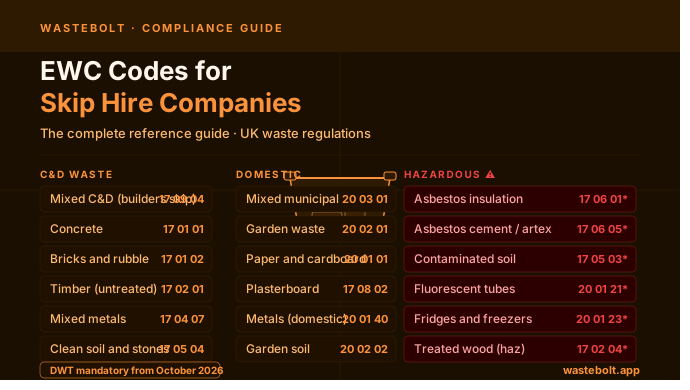
Introduction
If you run a skip hire business, you are moving waste every single day — and every single collection legally requires a Waste Transfer Note with the correct six-digit EWC code for the waste being carried.
Getting the EWC code wrong is the most common compliance mistake on waste transfer documentation. For skip companies specifically, the challenge is that skip contents vary enormously — a domestic skip can contain anything from garden waste to construction rubble to materials that are actually hazardous and need to be handled completely differently.
This guide covers every significant waste stream a skip hire company will encounter, the correct EWC code for each, what to do with mixed loads, and the hazardous materials that occasionally end up in skips and require a completely different compliance process.
Tip: Not sure which EWC code applies to a specific waste stream? Use our free EWC Code List & Search Tool to search the full UK Waste Classification system by keyword or code.
What is an EWC Code?
An EWC code is a six-digit code from the European Waste Catalogue — retained in UK law post-Brexit as the UK Waste Classification System. Every Waste Transfer Note completed in the UK must include the correct EWC code for the waste being moved.
The six digits work as three pairs:
- First pair — the industry or process generating the waste (e.g. 17 = construction and demolition, 20 = municipal waste)
- Second pair — the sub-category within that process
- Third pair — the specific waste type
Codes marked with an asterisk (*) in the official catalogue are hazardous. Hazardous waste cannot go on a standard Waste Transfer Note — it requires a Hazardous Waste Consignment Note and must be handled by a carrier licensed for hazardous waste.
Construction and Demolition Waste — EWC Codes
The majority of skip hire work involves construction and demolition (C&D) waste. These all fall under Chapter 17 of the EWC.
Concrete, Bricks, Tiles and Ceramics
| Waste Description | EWC Code | Notes |
|---|---|---|
| Concrete | 17 01 01 | Clean concrete only — not contaminated with paint, asbestos or chemicals |
| Bricks | 17 01 02 | Clean bricks from demolition or construction |
| Tiles and ceramics | 17 01 03 | Floor tiles, roof tiles, bathroom ceramics |
| Mixed concrete, bricks and tiles | 17 01 07 | Mixed C&D mineral waste — most common for general builders skips |
Practical note: Code 17 01 07 is the one you will use most often for builders skips containing a mix of rubble. If the skip is purely concrete (a concrete break-out job, for example), use 17 01 01 specifically.
Wood, Glass and Plastics
| Waste Description | EWC Code | Notes |
|---|---|---|
| Wood | 17 02 01 | Untreated timber, timber offcuts, wooden pallets |
| Glass | 17 02 02 | Window glass, glazing — not bottles or packaging glass |
| Plastic | 17 02 03 | Plastic sheeting, pipes, fittings from construction |
| Treated wood (non-hazardous) | 17 02 01 | Painted or varnished timber where treatment is non-hazardous |
| Treated wood (hazardous) | 17 02 04* | Hazardous — wood treated with preservatives containing arsenic, copper chrome, creosote |
Watch out for: Old railway sleepers, telegraph poles, and pre-1990 fence posts — these are frequently treated with hazardous preservatives and must not go into a standard skip load as 17 02 01. If in doubt, treat as hazardous.
Metals
| Waste Description | EWC Code | Notes |
|---|---|---|
| Copper, bronze and brass | 17 04 01 | Clean copper pipe, fittings |
| Aluminium | 17 04 02 | Aluminium framing, guttering, cans |
| Lead | 17 04 03 | Lead flashing, pipes — non-contaminated |
| Zinc | 17 04 04 | Galvanised steel, zinc sheet |
| Iron and steel | 17 04 05 | Structural steel, rebar, iron — most common |
| Tin | 17 04 06 | Tin cans, tinplate |
| Mixed metals | 17 04 07 | Mixed scrap metal — most common for skip loads containing metal |
| Cables (non-hazardous) | 17 04 11 | Electrical cable — no hazardous insulation |
| Cables (hazardous) | 17 04 10* | Hazardous — cables containing oil, tar or other hazardous substances |
Soil, Stones and Dredging Spoil
| Waste Description | EWC Code | Notes |
|---|---|---|
| Soil and stones (non-hazardous) | 17 05 04 | Clean excavated soil and stones — no contamination |
| Soil and stones (hazardous) | 17 05 03* | Hazardous — contaminated land, fuel-affected soil, industrial ground |
| Dredging spoil (non-hazardous) | 17 05 06 | Dredged material from watercourses — clean |
| Dredging spoil (hazardous) | 17 05 05* | Hazardous — contaminated dredgings |
| Ballast and track gravel | 17 05 08 | Railway ballast — non-hazardous |
Important: Never assume excavated soil is clean. If the site has any history of industrial use, petrol stations, dry cleaning, or chemical storage, the soil should be tested before classification. Contaminated soil incorrectly sent as 17 05 04 is a serious compliance failure.
Insulation and Plasterboard
| Waste Description | EWC Code | Notes |
|---|---|---|
| Insulation (non-hazardous) | 17 06 04 | Mineral wool, fibreglass, foam insulation — no asbestos |
| Insulation (hazardous) | 17 06 03* | Hazardous — insulation containing or contaminated with hazardous substances |
| Asbestos insulation | 17 06 01* | Hazardous — any asbestos-containing insulation material |
| Asbestos-containing construction materials | 17 06 05* | Hazardous — asbestos cement, artex, floor tiles containing asbestos |
| Gypsum-based construction materials (non-hazardous) | 17 08 02 | Clean plasterboard — no contamination |
| Gypsum-based construction materials (hazardous) | 17 08 01* | Hazardous — plasterboard contaminated with hazardous substances |
The plasterboard problem — read this carefully. Plasterboard (17 08 02) is not hazardous in itself, but it causes a serious problem at landfill when mixed with biodegradable waste. Gypsum in contact with biodegradable material in an anaerobic environment produces hydrogen sulphide — a toxic gas. As a result, many landfill operators refuse mixed loads containing plasterboard, and Environment Agency guidance strongly recommends keeping plasterboard separate from other waste streams. Always ask your disposal site what they will and will not accept in a mixed load.
Mixed Construction and Demolition Waste
| Waste Description | EWC Code | Notes |
|---|---|---|
| Mixed C&D waste (non-hazardous) | 17 09 04 | The catch-all for mixed builders skip loads — use where contents are truly mixed and non-hazardous |
| Mixed C&D waste containing hazardous substances | 17 09 03* | Hazardous — mixed load contaminated with hazardous materials |
17 09 04 is the code most skip hire companies use most often for a general builders skip. It covers mixed rubble, timber, plasterboard, metal, and general C&D debris where sorting has not occurred. However, if you know the skip contains predominantly one material type (all rubble, all metal, all timber), use the specific code — it is more accurate and may affect where the load can go.
Municipal and Domestic Waste — EWC Codes
Domestic skip hire produces a different set of waste streams — house clearances, garden clearances, general household clear-outs.
| Waste Description | EWC Code | Notes |
|---|---|---|
| Mixed municipal waste | 20 03 01 | General domestic skip contents — mixed household waste |
| Garden and park waste | 20 02 01 | Grass, hedge clippings, branches, leaves — biodegradable |
| Soil and stones from gardens | 20 02 02 | Topsoil, compost, garden stones — residential source |
| Mixed packaging (paper, card, plastic, metal) | 15 01 06 | Packaging waste from domestic or commercial source |
| Paper and cardboard | 20 01 01 | Source-separated paper and card |
| Metals | 20 01 40 | Mixed metals from domestic source |
| Wood | 20 01 38 | Wood that is not classified as hazardous — furniture, shelving |
| Textiles | 20 01 11 | Clothing, soft furnishings |
| Electrical equipment (non-hazardous) | 20 01 36 | WEEE not containing hazardous components |
| Electrical equipment (hazardous) | 20 01 35* | Hazardous — WEEE containing hazardous components (fridges, CRT screens) |
| Fridges and freezers | 20 01 23* | Hazardous — contains refrigerant gases |
Hazardous Materials Found in Skips
This section is critical. Hazardous materials occasionally end up in skips — either because the customer did not know they were hazardous, or because they hoped nobody would notice. As the skip operator, you are responsible for what leaves your site on your vehicle.
Asbestos
Asbestos is the big one. It is still found regularly in pre-2000 buildings — in artex, floor tiles, roof sheets, lagging, and insulation. Any suspected asbestos-containing material must be treated as hazardous.
| Material | EWC Code | Notes |
|---|---|---|
| Asbestos insulation and lagging | 17 06 01* | All forms of asbestos insulation |
| Asbestos-containing construction materials | 17 06 05* | Asbestos cement sheets, artex, floor tiles |
Asbestos waste requires a licensed asbestos waste contractor, a Hazardous Waste Consignment Note, and a permitted disposal facility. It cannot go into a standard skip. If asbestos is found in a skip after collection, do not tip the load — contact a licensed asbestos waste contractor.
Other Hazardous Materials
| Waste Description | EWC Code | Notes |
|---|---|---|
| Fluorescent tubes and light bulbs | 20 01 21* | Contains mercury — extremely common in commercial clear-outs |
| Paint (water-based, non-hazardous) | 20 01 28 | Dried or solidified water-based paint only |
| Paint (solvent-based, hazardous) | 20 01 27* | Liquid solvent-based paint, thinners, varnishes |
| Batteries (mixed) | 20 01 34* | All battery types — car batteries, household batteries |
| Motor oils and lubricants | 13 02 08* | Engine oil, gear oil — even small quantities |
| Fuel-contaminated materials | 17 05 03* | Soil, aggregate, or materials soaked in fuel or oil |
| Solvents | 14 06 03* | Cleaning solvents, degreasers |
| Aerosols (hazardous) | 15 01 11* | Pressurised aerosol cans containing hazardous substances |
Your driver's responsibility: If a driver notices any of these materials in a skip before or during collection, they should not collect the skip without consulting the office. Collecting a skip load containing unmanifested hazardous waste is a compliance offence — the carrier is liable regardless of what the customer put in.
Mixed Loads — What to Do
One of the most common questions from skip companies is what to do when a skip contains multiple waste types. There are three approaches:
Use the most appropriate catch-all code. For a general builders skip with mixed C&D waste, 17 09 04 is the correct code. For a domestic skip with mixed household waste, 20 03 01 is correct. These codes exist precisely for mixed loads.
List multiple EWC codes on the WTN. Where a skip genuinely contains distinct, identifiable waste streams (half rubble, half metal), you can list both codes on Section D of the WTN with approximate quantities for each. This is more accurate and demonstrates better compliance practice.
Separate the load before transfer. Some disposal sites will only accept source-separated loads for certain materials (clean wood, clean metal, clean soil). If your customer has sorted the skip or if you sort at a transfer station before onward movement, each separated stream gets its own EWC code and its own WTN.
Season Tickets for Regular Collections
If you have a commercial customer whose skip is emptied regularly — a builder on a long contract, a manufacturer, a retail site — a Season Ticket covers up to 12 months of transfers for the same waste type between the same two parties. It removes the need to produce a new WTN for every single collection.
The Season Ticket still requires a docket for each individual lift, but the WTN paperwork is significantly reduced. For skip hire companies doing 10+ collections per week from the same customer, this is worth setting up.
Carrier Licence Requirements
Every vehicle moving waste — including skip lorries — must be operated by a company holding a valid Waste Carrier Licence from the relevant environmental regulator:
- England: Environment Agency — check the public register
- Scotland: SEPA
- Wales: Natural Resources Wales
- Northern Ireland: NIEA
Your waste carrier registration number appears on every WTN you complete in Section B. Make sure it is current — licences require renewal and an expired registration invalidates your compliance documentation.
Digital Waste Tracking 2026
From October 2026, Digital Waste Tracking (DWT) becomes mandatory across the UK. All waste movements — including every skip collection — will need to be recorded digitally on the EA's central platform rather than on paper WTNs.
For skip hire companies doing high volumes of collections, this means having a digital system in place before October is not optional — it is a legal requirement. Wastebolt connects directly to the EA's DWT platform and handles all the EWC codes covered in this guide, including season tickets, dockets, and driver task management from a mobile app.
Start a free trial — no credit card required.
Frequently Asked Questions
What EWC code do I use for a general builders skip? For a genuinely mixed builders skip containing rubble, timber, metal and general C&D debris, use 17 09 04 (mixed construction and demolition waste). If the contents are predominantly one material, use the specific code for that material.
What EWC code do I use for a domestic house clearance skip? 20 03 01 (mixed municipal waste) is the correct code for a general domestic skip. If the skip contains predominantly garden waste, use 20 02 01 instead.
Can I put all the EWC codes on one WTN for a mixed load? Yes. Section D of the WTN can list multiple EWC codes where the load genuinely contains distinct waste streams. Provide an approximate quantity for each.
What do I do if my driver finds asbestos in a skip? Do not collect or move the skip. Contact a licensed asbestos waste contractor. The asbestos must be removed, packaged, and manifested as hazardous waste (17 06 01* or 17 06 05*) before the remainder of the skip can be emptied normally.
Does plasterboard in a skip make the whole load hazardous? No — plasterboard (17 08 02) is not itself hazardous. However many landfill and transfer sites refuse mixed loads containing plasterboard because of the hydrogen sulphide risk when mixed with biodegradable material. Check with your disposal site before tipping.
Do I need a new WTN for every skip I collect? Yes, unless you have a Season Ticket in place with the specific customer for that specific waste type. A Season Ticket covers multiple collections over up to 12 months and significantly reduces paperwork for regular customers.
What happens if I use the wrong EWC code? The Environment Agency can issue a fixed penalty notice or refer the matter for prosecution. Incorrect EWC codes during an audit indicate non-compliance and can trigger a wider investigation of your waste records and carrier licence.
Quick Reference — EWC Codes for Skip Hire
| Waste Type | EWC Code | Hazardous? |
|---|---|---|
| Mixed C&D waste (general builders skip) | 17 09 04 | No |
| Concrete | 17 01 01 | No |
| Bricks | 17 01 02 | No |
| Mixed rubble (concrete, bricks, tiles) | 17 01 07 | No |
| Timber (untreated) | 17 02 01 | No |
| Treated wood (hazardous preservatives) | 17 02 04 | Yes* |
| Mixed metals | 17 04 07 | No |
| Iron and steel | 17 04 05 | No |
| Clean soil and stones | 17 05 04 | No |
| Contaminated soil | 17 05 03 | Yes* |
| Plasterboard | 17 08 02 | No |
| Asbestos insulation | 17 06 01 | Yes* |
| Asbestos cement / artex | 17 06 05 | Yes* |
| Mixed municipal (domestic skip) | 20 03 01 | No |
| Garden waste | 20 02 01 | No |
| Fluorescent tubes | 20 01 21 | Yes* |
| Fridges and freezers | 20 01 23 | Yes* |
| Solvent-based paint | 20 01 27 | Yes* |
| Batteries | 20 01 34 | Yes* |
*Hazardous waste requires a Hazardous Waste Consignment Note — not a standard WTN.
Last updated: April 2026. For the most current EWC code classifications, refer to the UK Waste Classification Technical Guidance (WM3).