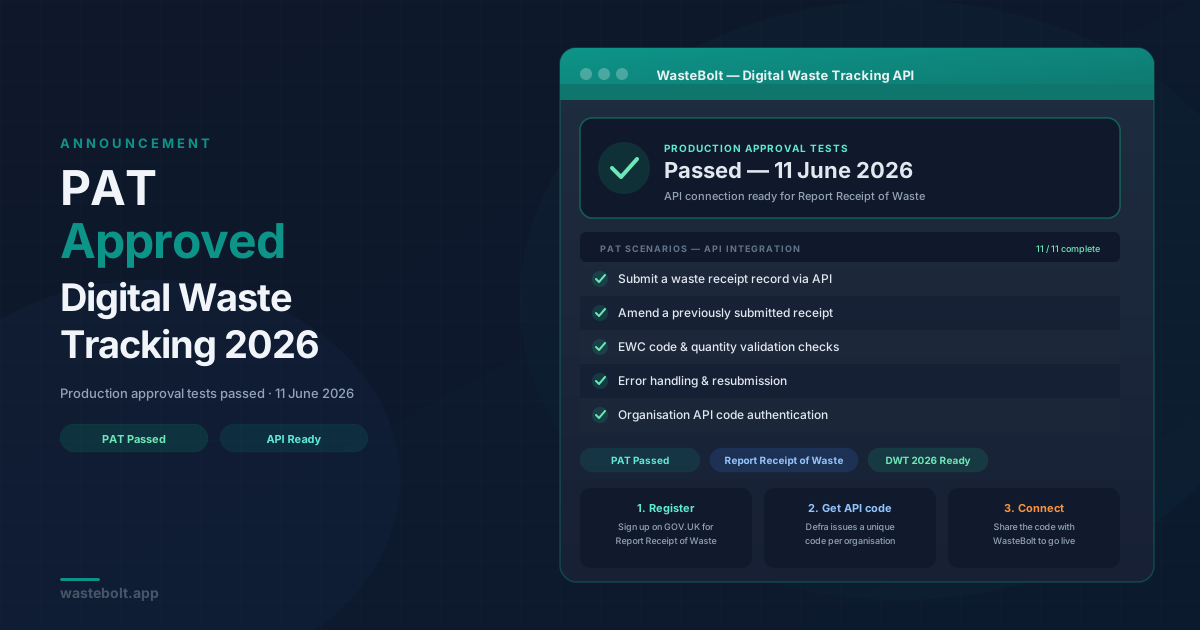
WasteBolt has passed Defra's production approval tests (PAT) for the Digital Waste Tracking (DWT) service, as of 11 June 2026 — and is now listed as an approved software provider on GOV.UK. In practical terms, this means WasteBolt's API integration with Defra's "report receipt of waste" service has been tested against Defra's official scenarios and is ready to support customers ahead of the digital reporting deadline later this year.
If you're a waste receiver — a permitted or licensed site that takes in waste from carriers — this post explains what PAT means, what's changing, and exactly how to get your site connected.
What is Digital Waste Tracking, and why does it matter now?
From 1 October 2026 (1 January 2027 in Scotland), permitted and licensed waste-receiving sites in the UK will need to report waste receipts to Defra digitally through the Report receipt of waste service. There are two ways to do this:
- Via software with an API connection to Defra's service (this is where WasteBolt comes in), or
- Manually, using Defra's own spreadsheet template uploaded through GOV.UK.
There's also an annual service charge of £26 per organisation from October 2026, regardless of which route you use.
For sites already using WasteBolt to manage waste transfer notes, weighbridge data, and EWC codes, the API route avoids duplicating that work in a separate spreadsheet — receipts can flow straight from WasteBolt to Defra.
What are Defra's "production approval tests" (PAT)?
Before a software provider can offer a live API connection to the Report Receipt of Waste service, Defra requires it to pass a set of production approval tests — a series of defined scenarios covering how waste receipt data is submitted, validated, and corrected through the API. Some providers receive PAT exemptions for specific scenarios (for example, around hazardous waste), where those scenarios don't apply to how their software works.
WasteBolt completed and passed Defra's full PAT process on 11 June 2026.
We want to be precise about what this does and doesn't mean. Defra's own guidance on choosing a software provider is clear that buying or using any third-party software is done at the customer's own risk, and Defra doesn't endorse or take responsibility for commercial software. Passing PAT means our API integration has been tested and accepted by Defra for production use — it isn't an endorsement of WasteBolt as a product, and we don't use any Defra branding to describe it.
WasteBolt on Defra's software provider list
Defra maintains a public list of software providers who can connect to the Report Receipt of Waste service. WasteBolt is listed as an approved provider following our PAT pass on 11 June 2026. You can verify this directly on GOV.UK.
As Defra's own guidance makes clear, buying or using any third-party software remains at the customer's own risk — Defra does not endorse commercial software. Passing PAT means our API integration has been tested and accepted for production use.
How waste receivers connect to Digital Waste Tracking via WasteBolt
If you run a permitted or licensed waste-receiving site, here's how to get set up before the October deadline.
Step 1: Register for "Report receipt of waste" on GOV.UK
Go to gov.uk/guidance/report-receipt-of-waste and register your organisation for the service. You'll need a Government Gateway or GOV.UK One Login account, and details of the permitted or licensed site(s) you operate.
Step 2: Get your unique API code
Once registered, Defra issues your organisation a unique API code. This code is what links your site's waste receipt records to your organisation's account on Defra's system — it's how the API connection is authenticated.
Step 3: Enter your API code in WasteBolt
Log into WasteBolt and go to Settings → Integrations. Enter your Defra API code in the Digital Waste Tracking credentials section and save. WasteBolt will connect your account to Defra's Report Receipt of Waste API — waste receipts recorded in WasteBolt can then be reported to Defra automatically, without manual spreadsheet entry.
We'll confirm with you once the connection is live and reporting correctly, well ahead of the 1 October 2026 deadline.
Getting Started
Not sure if your site is ready for October 2026? Take our free DWT Readiness Check to find out where you stand, or browse our Digital Waste Tracking guides for more detail on what's changing.
If your site needs to comply with Digital Waste Tracking from October 2026:
- Register at gov.uk/guidance/report-receipt-of-waste if you haven't already.
- Get your unique API code from Defra.
- Log into WasteBolt, go to Settings → Integrations, and enter your API code in the Digital Waste Tracking section.
- Carry on logging weighbridge data, transfer notes, and waste receipts in WasteBolt as normal — once connected, reporting to Defra happens automatically.
If you have questions about timelines, the £26 annual charge, or how your specific site type is affected, Defra's Report receipt of waste guidance is the authoritative source — and our support team is happy to help with the WasteBolt side of the setup.