The October 2026 Deadline — What It Actually Means for Small Sites
From October 2026, every permitted or licensed waste receiving site in England, Wales, and Northern Ireland must record all incoming waste movements on the Environment Agency's Digital Waste Tracking (DWT) platform. Scotland follows in January 2027.
This is not optional and it is not something you can prepare for at the last minute. The DWT system is already live in public beta and waste receiving sites can connect now.
For large operators — national transfer stations, major MRFs, large composting facilities — this is a procurement exercise. They have IT teams, software vendors, and implementation budgets.
For small permitted sites — a rural transfer station, a small MRF, an independent composting operation, a skip hire company with a permitted tip site — the question is different. You don't need enterprise software. You need something that connects to the DWT API, captures the right data, and doesn't cost a fortune to set up.
This guide is written for you.
What Is the DWT Platform?
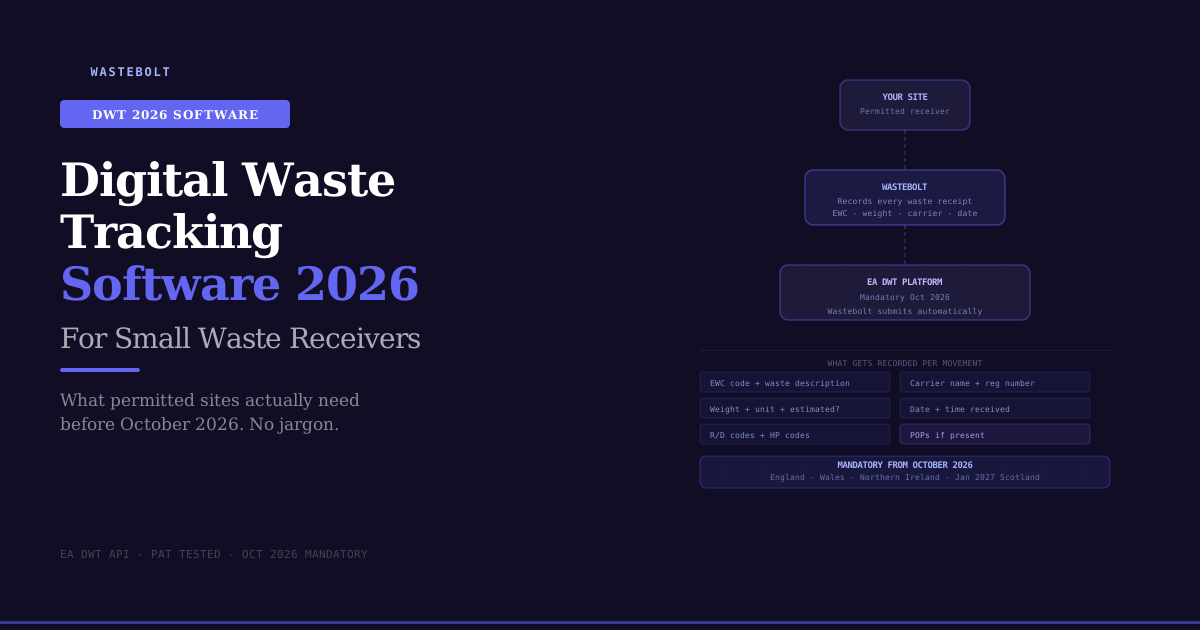
The Digital Waste Tracking platform is a central system operated by DEFRA and the Environment Agency. When waste arrives at your permitted site, you record the movement on the DWT platform — or your software does it automatically via an API connection.
The platform replaces the paper waste transfer note as the primary record of waste receipt. From October 2026, the DWT submission is the legally required record for receiving sites — not the paper WTN.
The DWT platform is accessible via:
- Direct entry through a Defra web portal (manual, suitable for very low volumes)
- CSV spreadsheet upload (Defra has confirmed this as a temporary option)
- API integration through your waste management software (the primary intended route for most sites)
For any site taking more than a handful of deliveries per day, manual portal entry is not practical. API integration via software is the route that makes operational sense.
What Data Must You Submit?
For each waste movement received, the DWT API requires:
Movement details
- Date and exact time waste was received
- Your unique reference (weighbridge ticket number, WTN number etc.)
Waste items — for each waste stream in the load:
- EWC code (six digits)
- Waste description (specific — not just the EWC category name)
- Physical form (solid, liquid, sludge, gas, powder, mixed)
- Number of containers and container type
- Weight — amount, unit (grams/kilograms/tonnes), and whether estimated
- Whether the waste contains POPs (persistent organic pollutants) — true or false, mandatory for every load
- Whether the waste is hazardous — true or false
- If hazardous: HP codes and any chemical/biological component details
- Disposal or recovery code (R/D code) — or explicitly state none
Carrier details
- Carrier organisation name
- Carrier registration number (CBDU/CBDL/WCR/ROC format)
- Means of transport (Road, Rail, Sea, Air, Inland Waterway)
- Vehicle registration number (mandatory for road transport)
Broker or dealer (if applicable)
- Organisation name and registration number
Receiving site
- Your site authorisation number (permit or exemption)
- Your site address
This is broadly the same information that currently goes on a paper WTN — but structured as digital data rather than handwritten fields.
What Software Do You Need?
You do not need a large enterprise system. You need software that:
- Captures all required DWT data fields in a straightforward form on a phone, tablet, or desktop
- Connects to the EA DWT API and submits the data automatically on receipt
- Returns and stores the Waste Tracking ID — the unique reference the DWT platform assigns to each accepted movement
- Handles validation — checking EWC codes, carrier registration format, required fields — so submissions don't fail
- Stores records for audit purposes (2 years minimum, 3 years for hazardous)
You do not need: weighbridge integration, complex reporting suites, fleet management, route optimisation, or any of the other features that enterprise waste software bundles in. If you want those things, great — but they're not what the DWT mandate requires.
How Wastebolt Connects to the DWT Platform
Wastebolt has a direct API integration with the EA DWT platform. When a waste movement is received and recorded in Wastebolt, the submission is sent automatically — you don't need to log into a separate Defra portal or export a spreadsheet.
Wastebolt has completed the EA's Production Approval Test (PAT) process, which means the integration has been validated by Defra against their test scenarios including:
- Basic waste receipts with single and multiple waste items
- Road transport movements
- Receipts with and without disposal/recovery codes
- Multiple EWC codes on a single movement
- Carrier details with and without registration numbers
- Broker/dealer involvement
- POPs waste components
- Hazardous waste with HP codes and consignment note codes
- Combined hazardous and POPs movements
This matters because a software integration that hasn't been through PAT testing may fail on real submissions — and a failed submission means the movement isn't recorded on the DWT platform, which is a compliance breach.
What Does the DWT Submission Process Look Like?
In Wastebolt, a DWT receipt submission works like this:
1. Vehicle arrives at your site The driver hands over their WTN or the weighbridge generates a ticket.
2. Open Wastebolt on any device Phone, tablet, or desktop — Wastebolt is a mobile-first progressive web app. No app store download required.
3. Create a new receipt Select or enter the carrier details (saved in your pick-list if it's a regular collector). Confirm or enter the EWC code, waste description, weight, and container type. Tick whether POPs or hazardous properties are present.
4. Wastebolt submits to the DWT platform The data is sent to the EA API automatically. Within seconds you receive a Waste Tracking ID — the unique reference that confirms the movement has been recorded.
5. Record stored The movement is stored in Wastebolt with the Waste Tracking ID, timestamp, and all submitted data. Searchable by date, carrier, EWC code, or any other field.
For a typical non-hazardous movement — say a skip arriving with mixed C&D waste — the process takes under 2 minutes from opening Wastebolt to receiving the DWT confirmation.
What About the Weighbridge?
Many permitted receiving sites use a weighbridge to record accurate incoming weights. The DWT system requires weight data but it does not currently mandate direct weighbridge integration — you can enter the weight manually from the weighbridge ticket.
For higher-volume sites, Wastebolt can be used alongside an existing weighbridge system. The weighbridge captures the weight; Wastebolt captures everything else and submits to DWT. This avoids the cost and complexity of full weighbridge software replacement while still meeting the mandate.
For sites already using weighbridge software, check whether your current provider is developing a DWT API integration. If they are not, or if the timeline is unclear, Wastebolt is an immediate alternative that works alongside existing systems.
What If I Currently Use Paper WTNs?
If your site currently accepts waste on paper WTNs and files them manually, the October 2026 mandate means your current process stops being sufficient — not because WTNs are being abolished, but because the DWT submission becomes an additional legal requirement alongside or replacing the WTN.
The practical path for paper-based sites:
Start using digital WTNs now. Every WTN you create in Wastebolt captures the data that will need to go to the DWT platform. Building the habit of digital capture now means October 2026 is a configuration change, not a process overhaul.
Set up DWT submission before the deadline. Wastebolt's DWT integration is live. You can begin submitting voluntarily now — which also helps you identify any edge cases in your waste streams before the mandate makes it mandatory. Our step-by-step DWT credentials guide walks through connecting your Defra API credentials in Settings → Integrations.
Do not rely on the spreadsheet route long-term. Defra has confirmed a temporary spreadsheet submission option for sites without software by October 2026. But this is explicitly a short-term fallback — it will be withdrawn, and high-volume sites will find it unworkable regardless.
Costs and Getting Started
Wastebolt is priced for small and independent waste businesses — not enterprise operators. Plans start at £24.99/month for a single user (admin), with higher tiers adding driver seats for task management and mobile capture.
There is no setup fee and no annual contract. A 7-day free trial lets you test the DWT submission process end-to-end before committing.
Start a free trial → — no credit card required.
Not sure if you need DWT software yet? Take our free DWT Readiness Check — a 7-question quiz that tells you exactly where your site stands against the October 2026 mandate and what to do next.
Timeline — What to Do and When
Now (May–July 2026)
- Register your site with the EA DWT platform if you haven't already
- Start a Wastebolt trial and test DWT submission with real movements
- Identify any unusual waste streams (hazardous, POPs) and confirm you're capturing the right data fields
August–September 2026
- Have your software and process confirmed
- Train any staff who will be recording receipts
- Do a full run-through of a typical day's receipts through the DWT system
October 2026
- Mandatory submission begins
- Every waste receipt must be recorded on the DWT platform on the day it's received
Frequently Asked Questions
Does the DWT mandate apply to all permitted sites or just large ones? All permitted and licensed waste receiving sites in England, Wales, and Northern Ireland must comply from October 2026, regardless of size. There is no small site exemption.
What is a Waste Tracking ID? A Waste Tracking ID is the unique reference number the DWT platform returns when a movement is successfully submitted. It confirms the movement has been recorded and is the primary audit reference. Wastebolt stores this automatically.
Can I use the Defra web portal instead of software? Yes, for now. Defra's web portal allows manual data entry. For sites with very low volumes (a handful of movements per week), this may be manageable. For any site with regular daily throughput, manual portal entry will quickly become unworkable.
Do carriers and producers have to use DWT too? Phase 1 (October 2026) covers receiving sites only. Phase 2 extends to carriers, brokers, and dealers from around October 2027. Producers follow in a later phase. For now, the obligation is on the receiving site.
Is Wastebolt's DWT integration tested and approved? Yes. Wastebolt has completed the EA's Production Approval Test (PAT) process, with all test scenarios validated against the live Defra API.
What happens if I miss the October 2026 deadline? Non-compliance with the DWT mandate is a regulatory offence. The EA can issue enforcement notices and refer cases for prosecution. Permitted sites that are not compliant by October 2026 risk enforcement action and, in serious cases, jeopardy to their permit.
Last updated: August 2026. Mandate dates and requirements correct as of August 2026 — check the EA and Defra websites for any updates.