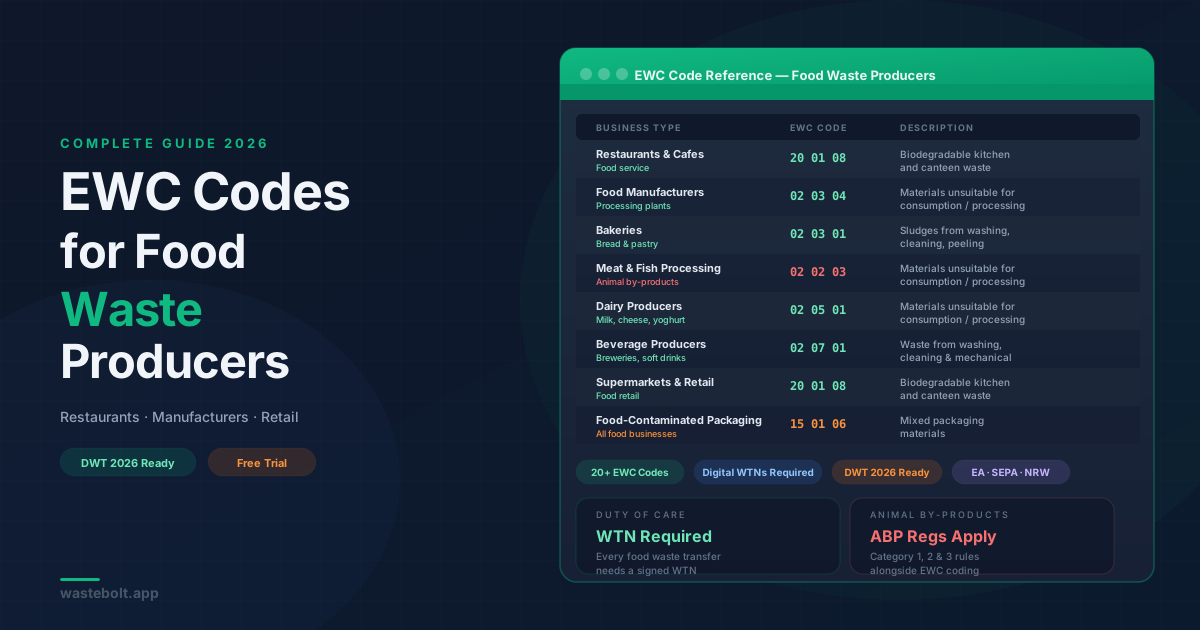
Introduction
Every time a UK food business transfers waste — whether plate scrapings from a restaurant kitchen, off-spec stock from a food manufacturer, or spent oil from a commercial fryer — a Waste Transfer Note (WTN) is legally required. And every WTN must include the correct six-digit European Waste Catalogue (EWC) code for the waste being moved.
Using the wrong EWC code is one of the most common compliance failures on WTNs. It can result in Duty of Care violations, Environment Agency enforcement action, and — if hazardous waste is misclassified as non-hazardous — potential prosecution.
This guide covers the EWC codes most commonly needed by food businesses in the UK, organised by business type, with plain-English descriptions and guidance on when to use each.
Tip: Not sure which EWC code applies to a specific waste stream? Use our free EWC Code List & Search Tool to search the full UK Waste Classification system by keyword or code.
Why EWC Codes Matter for Food Businesses
The EWC code is a mandatory field on every Waste Transfer Note. It is a six-digit code that classifies the type of waste being transferred. The correct code:
- Confirms whether the waste is hazardous or non-hazardous
- Determines which receiving sites can legally accept it
- Defines the record-keeping requirements for carrier and receiver
- Forms part of mandatory digital waste tracking (DWT) reporting from October 2026
Food businesses generate a wide variety of waste streams — from kitchen scraps and used cooking oil to process sludge and packaging — each requiring a different EWC code.
EWC Codes for Restaurants, Cafes, and Caterers
These businesses primarily generate post-consumer food waste and packaging.
| EWC Code | Waste Description | Notes |
|---|---|---|
| 20 01 08 | Biodegradable kitchen and canteen waste | The primary code for food scraps, plate scrapings, and organic kitchen waste. Used by restaurants, cafes, school canteens, and catering companies. |
| 20 01 25 | Edible oils and fats | Used cooking oil from fryers and kitchen equipment. Keep separate from food waste — never mixed. Usually collected by specialist UCO contractors. |
| 15 01 01 | Paper and cardboard packaging | Pizza boxes, food cartons, cardboard packaging. Must be reasonably free from food contamination. |
| 15 01 02 | Plastic packaging | Cling film, plastic containers, carrier bags. |
| 15 01 07 | Glass packaging | Bottles and jars. |
| 20 03 01 | Mixed municipal waste | General bin waste where full segregation is not practical. Use more specific codes wherever possible. |
EWC Codes for Food Manufacturers and Processors
Food manufacturing generates more complex waste streams, including process residues and materials unsuitable for human consumption.
| EWC Code | Waste Description | Notes |
|---|---|---|
| 02 03 04 | Materials unsuitable for consumption or processing | The primary code for production waste — off-spec products, expired ingredients, and waste from processing lines. Covers most food manufacturer production loss. |
| 02 03 01 | Sludges from washing, cleaning, peeling, centrifuging and separation | Process sludge generated during food preparation and washing operations. |
| 02 03 02 | Wastes from preserving agents | Waste preservatives, brine, and pickling solutions (non-hazardous variants). |
| 02 03 05 | Sludges from on-site effluent treatment | Sludge from a wastewater treatment plant on a food manufacturing site. |
| 02 03 99 | Wastes not otherwise specified | Use only where no other code in the 02 03 chapter precisely fits. |
EWC Codes for Bakeries and Confectionery Producers
| EWC Code | Waste Description | Notes |
|---|---|---|
| 02 06 01 | Materials unsuitable for consumption or processing | Waste bread, cakes, biscuits, confectionery, and off-spec baked goods. The main production waste code for bakeries. |
| 02 06 02 | Wastes from preserving agents | Waste food additives and preservatives used in baking and confectionery production. |
| 02 06 03 | Sludges from on-site effluent treatment | Wastewater sludge from bakery cleaning and processing operations. |
EWC Codes for Meat and Fish Processors
Animal tissue waste has specific handling requirements that go beyond a standard WTN.
| EWC Code | Waste Description | Notes |
|---|---|---|
| 02 02 02 | Animal-tissue waste | Offcuts, trimmings, and animal tissue from slaughterhouses and meat processing. Subject to Animal By-Product Regulations — additional documentation required. |
| 02 02 03 | Materials unsuitable for consumption or processing | Off-spec meat and fish products. |
| 02 02 01 | Sludges from washing and cleaning | Process sludge from meat and fish washing operations. |
| 02 02 04 | Sludges from on-site effluent treatment | Wastewater sludge from effluent treatment on a meat processing site. |
Important: Animal by-products are regulated under the Animal By-Product Regulations (retained UK law from EC No 1069/2009). Movements of Category 1, 2, or 3 ABP require specific ABPR documentation in addition to a WTN. Always confirm requirements with your waste contractor before moving this waste stream.
EWC Codes for Dairy Producers
| EWC Code | Waste Description | Notes |
|---|---|---|
| 02 05 01 | Materials unsuitable for consumption or processing | Off-spec dairy products — waste milk, cheese, yoghurt, and butter. |
| 02 05 02 | Sludges from on-site effluent treatment | Dairy process wastewater sludge from effluent treatment. |
EWC Codes for Beverage Producers
| EWC Code | Waste Description | Notes |
|---|---|---|
| 02 07 01 | Wastes from washing, cleaning and mechanical reduction of raw materials | Hop waste, grape pomace, spent grain from brewing and distilling. |
| 02 07 02 | Wastes from spirits distillation | Distillation residues and spent wash. |
| 02 07 04 | Materials unsuitable for consumption or processing | Off-spec product and waste ingredients from beverage production lines. |
| 02 07 05 | Sludges from on-site effluent treatment | Wastewater sludge from beverage production and cleaning operations. |
EWC Codes for Supermarkets and Food Retail
| EWC Code | Waste Description | Notes |
|---|---|---|
| 20 01 08 | Biodegradable kitchen and canteen waste | Food waste from in-store kitchens, deli counters, and prepared food sections. |
| 02 03 04 | Materials unsuitable for consumption or processing | Expired packaged goods and off-spec stock removed from sale. More accurate than 20 01 08 for large volumes of packaged product waste. |
| 15 01 01 | Paper and cardboard packaging | Cardboard from deliveries and in-store packaging. |
| 15 01 06 | Mixed packaging | Where paper, plastic, and other packaging types are not separated. |
| 20 03 01 | Mixed municipal waste | General waste not otherwise classified. |
Hazardous EWC Codes in the Food Sector
Most food waste is non-hazardous, but certain materials carry a hazardous classification:
| EWC Code | Waste Type | Status |
|---|---|---|
| 15 01 10* | Packaging containing residues of hazardous substances | Hazardous — requires a Hazardous Waste Consignment Note |
| 02 03 02* | Certain preserving agents containing hazardous substances | Check — the asterisk (*) variant is hazardous |
An asterisk (*) alongside an EWC code always denotes hazardous waste. Hazardous waste requires a Hazardous Waste Consignment Note rather than a standard WTN, and the receiving site must hold an appropriate environmental permit.
Common Mistakes Food Businesses Make
Using 20 03 01 for everything. Mixed municipal waste is a catch-all but should only be used where segregation is genuinely not possible. Specific codes like 20 01 08 and 02 03 04 are more accurate and better practice for audit trails.
Confusing 20 01 08 and 02 03 04. Use 20 01 08 for post-consumer food waste (plate scrapings, kitchen offcuts). Use 02 03 04 for pre-consumer production waste (off-spec products, waste from manufacturing lines). They describe different points in the food chain.
Mixing used cooking oil with food waste. UCO (20 01 25) must be stored in a separate, dedicated container. Mixing it with 20 01 08 can cause problems at the receiving site and may result in an invalid WTN.
Missing Animal By-Products paperwork. A WTN alone is not sufficient when moving animal tissue waste (02 02 02). ABPR category documentation must accompany every such transfer.
Frequently Asked Questions
Do I need an EWC code on my WTN even for small quantities of waste?
Yes. Every Waste Transfer Note in the UK must include the correct EWC code regardless of the quantity being transferred. There is no minimum volume threshold for the EWC code requirement.
What if I am not sure which EWC code to use?
Choose the most specific code that accurately describes the waste. If genuinely uncertain, your waste carrier should be familiar with common codes for your waste type and can advise. Using 20 03 01 (mixed municipal) is a last resort, not a default.
Have the EWC codes changed since Brexit?
The UK retained the European Waste Catalogue codes into UK law post-Brexit. There have been no major changes to the list since retention in 2021. The Environment Agency publishes technical guidance for waste classification — consult this for definitive classification decisions on unusual waste streams.
Can I put multiple EWC codes on one WTN?
Each WTN should cover a single waste type with a single EWC code. If multiple waste types are collected in the same load, a separate WTN (or separately identified section) is required for each code. Digital WTN platforms typically support multi-stream notes to handle this efficiently.