What Is Waste Management Software?
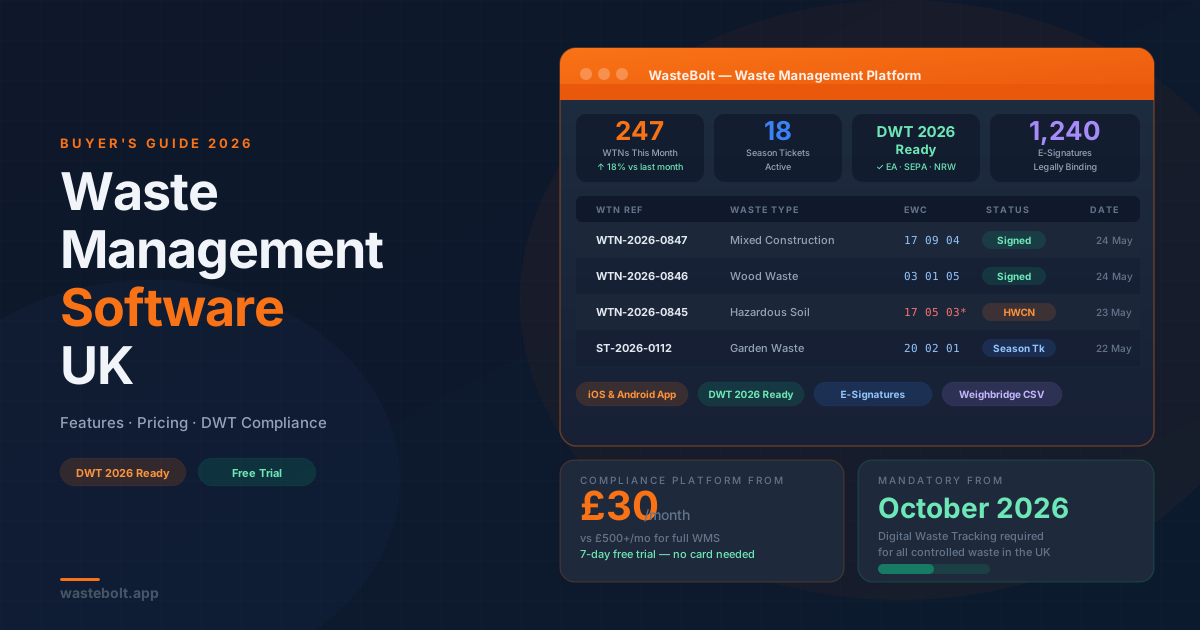
Waste management software is a digital platform that helps UK businesses create, sign, store, and report on waste compliance documentation — primarily Waste Transfer Notes (WTNs), Season Tickets, and Hazardous Waste Consignment Notes.
For waste carriers, producers, and receiving sites, this replaces paper forms, clipboard sign-offs, and manual filing with a digital audit trail accessible from any device.
In 2026, waste management software has become essential: mandatory Digital Waste Tracking (DWT) comes into force in October, requiring all waste movements to be reported digitally to UK regulators. Every business that handles controlled waste needs a compliant digital solution before that deadline.
Who Needs Waste Management Software?
You likely need waste management software if your business:
- Produces waste and needs Duty of Care documentation for every transfer
- Carries waste as a registered waste carrier — skip hire, general haulage, specialist collections
- Receives waste at a permitted facility, transfer station, or recycling site
- Runs construction or demolition projects generating multiple waste streams on site
- Operates skip hire with multiple collections and drops per day
- Employs field operatives who need to capture WTNs on site without returning to the office
Key Features to Look For
Digital WTN Creation
The core function. You should be able to create a compliant Waste Transfer Note in under two minutes — EWC code selection, waste description, quantities, containment method, and all three party details included.
Season Tickets
For recurring transfers of the same waste type between the same parties, a Season Ticket covers up to 12 months. Your platform should support creating and managing Season Tickets alongside individual WTNs.
Mandatory DWT 2026 Compliance
From October 2026, all waste movements in the UK must be reported digitally to the Environment Agency (England), SEPA (Scotland), NRW (Wales), or NIEA (Northern Ireland). Your platform must be ready for this — not "coming soon", but live and tested before the deadline.
E-Signatures
Digital WTNs require legally binding electronic signatures from the waste producer, carrier, and receiver. Look for a platform where the other party can sign without needing to create an account.
Built-In EWC Code Database
Every WTN requires the correct six-digit European Waste Catalogue code. A searchable, built-in EWC database reduces classification errors and speeds up note creation significantly.
Hazardous Waste Consignment Notes
If you handle any hazardous streams — asbestos, clinical waste, contaminated soil, POPs-containing materials — you need Hazardous Waste Consignment Note (HWCN) functionality included, not as a paid add-on.
Mobile App
Field operatives need to create and sign WTNs on site, not back at the office. A native iOS and Android app is essential for skip hire companies and waste carriers.
Weighbridge Integration
For sites with weighbridges, the ability to import CSV exports from common weighbridge systems and auto-generate WTNs eliminates double-entry and data errors.
Reporting
At minimum: waste movement reports by period, EWC code, customer, and receiving site. These are required for permit compliance, regulatory returns, and internal ESG reporting.
Compliance-Focused Platforms vs Full Waste Management Systems
Full Waste Management Systems (WMS) cover vehicle routing, CRM, invoicing, contract management, and compliance documentation in one enterprise platform. They typically cost £500–£2,000+ per month, require long implementation periods, and suit large waste contractors managing fleets of 20 or more vehicles.
Compliance-focused platforms focus on digital WTNs, Season Tickets, HWCNs, DWT submission, and compliance reporting. They are faster to deploy, significantly more affordable (typically £30–£150 per month), and designed to be used across the whole team — from office admin to drivers in the field.
For most UK waste carriers, skip hire companies, and waste producers, a compliance-focused platform covers every legal requirement without the cost and complexity of a full WMS.
How to Evaluate and Choose
Before committing to any platform, work through this checklist:
- Is it DWT 2026-ready? Ask directly — not "planned" or "in development" but live, tested, and in use by real businesses today.
- Can drivers use it from a mobile device? If your operatives are in the field, office-only software is not sufficient.
- Does it handle hazardous waste? If you touch any hazardous streams, HWCN support must be included.
- What does onboarding look like? Software your team will not use is worse than no software at all. Ask about training, support, and time-to-go-live.
- How is pricing structured? Per-user pricing is more predictable than per-document for high-volume operations.
- Can it connect to your weighbridge? If you run a weighbridge, manual re-entry of weighbridge data is a risk you do not need.
Frequently Asked Questions
Is digital waste documentation legally compliant in the UK?
Yes. Digital WTNs and HWCNs are fully legal under UK law. Electronic signatures are binding under the Electronic Communications Act 2000. The Environment Agency and other UK regulators actively encourage and accept digital compliance documentation.
Do I need waste management software before October 2026?
If you handle controlled waste in England, mandatory DWT requires digital reporting from October 2026. Starting now means your team builds the habit before it becomes legally required — and you avoid the last-minute scramble as the deadline approaches.
Can one platform handle both hazardous and non-hazardous waste?
Yes, and it should. The best platforms handle standard WTNs, Season Tickets, Hazardous Waste Consignment Notes, and DWT submission from a single login. Managing separate systems for different waste types increases admin burden and creates gaps in your audit trail.
What happens to my paper WTNs after October 2026?
You are still legally required to keep copies of all waste transfer documentation for a minimum of two years in England, Wales, and Northern Ireland (three years in Scotland). Paper WTNs created before the DWT mandate must be retained. Digital records going forward should be stored securely and remain accessible for the full retention period.