Mandatory Digital Waste Tracking 2026: What It Means for Your Business
From October 2026, all permitted waste receiving sites in England must submit waste records digitally to the Environment Agency. Here is a plain-English guide to what that actually means — for waste carriers, skip hire operators, and receiving sites.
Already using WasteBolt? You're DWT-ready.
WasteBolt submits directly to the EA's DWT platform. No extra software needed.
What is Digital Waste Tracking?
Digital Waste Tracking (DWT) is the Environment Agency's programme to replace paper Waste Transfer Notes with a digital system that records waste movements in real time. Instead of filling in a paper form and filing it in a drawer for two years, waste movements will be recorded electronically and submitted to the EA's central platform.
The goal is simple: give regulators a live, searchable record of where waste is going — reducing illegal dumping, improving data quality, and making it easier for legitimate operators to demonstrate compliance.
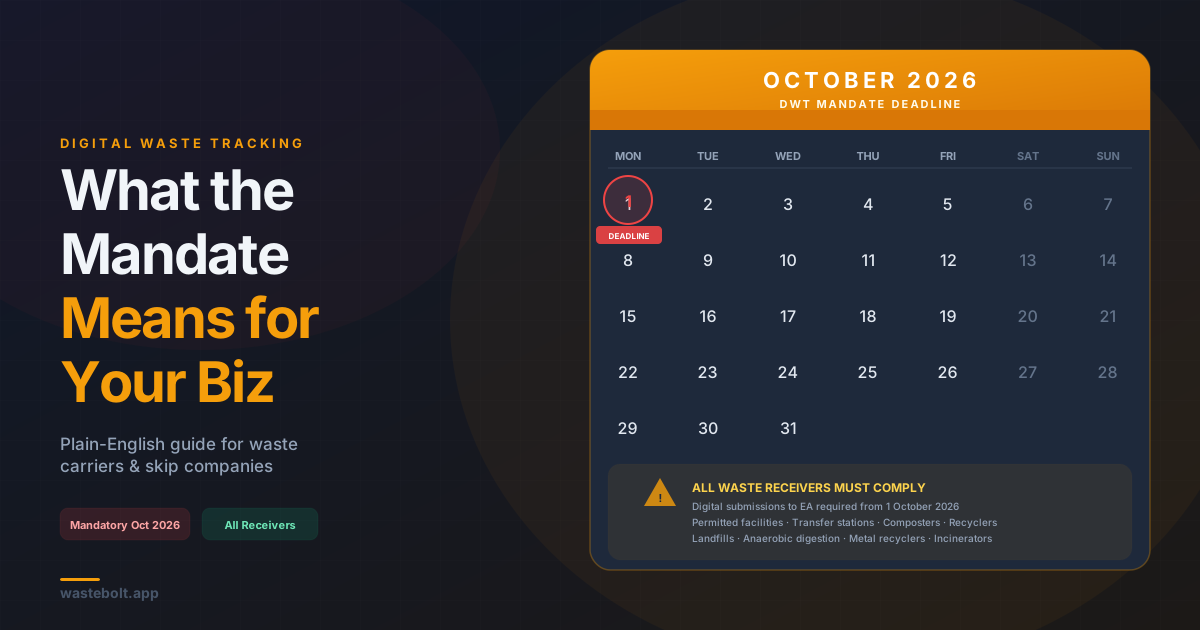
The DWT platform has been in development since 2023. It is already live and operational in private beta. From October 2026, submitting to it becomes a legal requirement — not optional.
Who must comply?
The Phase 1 mandate (October 2026) applies to waste receiving sites — specifically, sites operating under an environmental permit that receive controlled waste from third parties. This includes:
- Permitted waste transfer stations
- Composting sites and anaerobic digestion plants
- Material Recycling Facilities (MRFs)
- Metal recycling and scrap yards operating under an environmental permit
- Landfill sites
- Incinerators and energy-from-waste facilities
- Hazardous waste treatment facilities
- Weighbridge facilities receiving third-party waste
The mandate also applies to waste brokers and dealers who arrange waste movements. If you act as a broker for controlled waste, you will need to ensure the loads you arrange are submitted through the DWT platform.
What exactly changes in October 2026?
Before October 2026, electronic DWT submission is voluntary. You can submit — and it is worth doing in advance to iron out any issues — but there is no legal obligation to do so today.
From 1 October 2026, the following change:
Receiving sites must submit electronically
Every load received at a permitted facility must be recorded in the EA's DWT system, not just on a paper WTN. The DWT submission includes waste type, EWC code, quantity, carrier details, and the producer.
A wasteTrackingId is generated
Each successful submission generates a unique reference (wasteTrackingId) from the EA's system. This is the digital equivalent of the WTN reference and forms part of your compliance record.
Paper WTNs remain valid alongside DWT
Paper WTNs are not abolished. Both the paper/digital WTN and the DWT submission are required in Phase 1. The DWT submission is an additional compliance step, not a replacement.
Carriers are not directly mandated in Phase 1
Waste carriers (including skip hire companies) are not required to submit to DWT themselves in Phase 1. However, the receiving site they deliver to will submit the load, so the data flows even if carriers don't submit directly.
What does this mean for skip hire operators?
If you are a skip hire company that collects waste from customers and delivers it to a permitted transfer station or processing facility, here is the honest answer: in Phase 1, the DWT submission is made by the receiving site, not by you.
However, this does not mean you can ignore DWT. The practical implications for skip hire are:
Your WTNs feed DWT submissions
The receiving facility uses the WTN you provide to create their DWT submission. If your WTN is missing fields (EWC code, carrier registration, waste description), the receiving site may reject the load or the submission may fail. Accurate WTNs are more important than ever.
Digital WTNs give you a head start
If you are still doing paper WTNs, a digital WTN system like WasteBolt means your records are already structured and accurate. When a later phase extends DWT to carriers, you will be ready with zero extra setup.
Some receiving sites may require pre-notification
As DWT matures, it is expected that receiving sites will require advance notice of incoming loads. Digital WTNs that can be shared ahead of arrival will become the standard way of operating.
Season Tickets still apply
If you have commercial customers you collect from regularly, Season Tickets remain valid under DWT. The receiving site still needs to submit each load individually, but your Season Ticket reference covers the paper side.
How to prepare now
There are six months between now and the October 2026 deadline. Here is a practical checklist:
Know whether you are in scope
Check whether your site operates under an environmental permit (EPR/XX123456 format) or a registered exemption. Permits = in scope. Exemptions only = not in Phase 1 scope.
Register on the DWT portal
Visit the EA's Digital Waste Tracking service and register your organisation. You will need your permit reference and company details. This is separate from any software you use.
Choose your submission method
You can submit via the EA's own web interface (manual, per load) or via API-connected software like WasteBolt (automated, from your existing records). For any site receiving more than a handful of loads per week, software is strongly recommended.
Test before October 2026
The EA DWT test environment (sandbox) is available now. If you are using software, ask your provider to submit test records so you know the flow works before it is mandatory.
Train your team
Whoever weighs in loads at the gate needs to understand the new process. If your software integrates directly, this is minimal training. If you are using the EA web portal, it will take more time per load.
Review your WTN accuracy
DWT submissions require EWC code, net weight, carrier registration, and producer details. If your current WTNs have gaps, fix the process now so your submissions don't fail from day one.
Using WasteBolt?
WasteBolt already connects directly to the EA's DWT API. If you receive waste and have WasteBolt on Pro or Enterprise, you can submit today — no extra setup required. Your WTNs are already structured correctly.
See the DWT submission featureFrequently asked questions
Who is affected by the mandatory digital waste tracking requirement?
All permitted waste receiving sites in England must comply from October 2026. This includes permitted transfer stations, composters, recyclers, landfills, anaerobic digestion plants, metal recyclers, incinerators, and any other site operating under an environmental permit that receives controlled waste from others.
Does the mandate apply to waste carriers as well as receiving sites?
The Phase 1 mandate (October 2026) focuses on waste receiving sites. Waste carriers — including skip hire companies — are not required to submit electronically in Phase 1, but they will need to produce WTNs that receiving sites can use for their DWT submissions. A later phase may extend the requirement to carriers.
What exactly does 'digital waste tracking' mean?
Digital Waste Tracking means recording waste movements electronically and submitting them to the Environment Agency's central DWT platform. Instead of paper Waste Transfer Notes filed in a drawer, waste movements are submitted as structured data in real time — giving regulators a digital audit trail.
What are the penalties for non-compliance after October 2026?
The Environment Agency can take enforcement action for failure to comply with permit conditions, which include the DWT submission requirement. Penalties can include warning letters, enforcement notices, permit suspension, and in serious cases prosecution. The EA has indicated a pragmatic approach to compliance in the early months, but it is best to be ready on day one.
Do I need to buy new software to comply?
You need software that can submit to the EA's DWT API. Some existing weighbridge or ERP systems may be updated by their suppliers to add DWT submission. WasteBolt already submits directly and is ready today — no additional software required.
Related guides
Watch the demo
Full DWT submission walkthrough — log a load, fix errors & submit to the EA in minutes
Stay ahead of UK waste compliance
Get practical guides, regulatory updates, and the occasional WasteBolt discount — straight to your inbox. No spam, unsubscribe any time.
By subscribing you agree to receive marketing emails from WasteBolt. See our Privacy Policy. Unsubscribe any time.