The Direct Answer
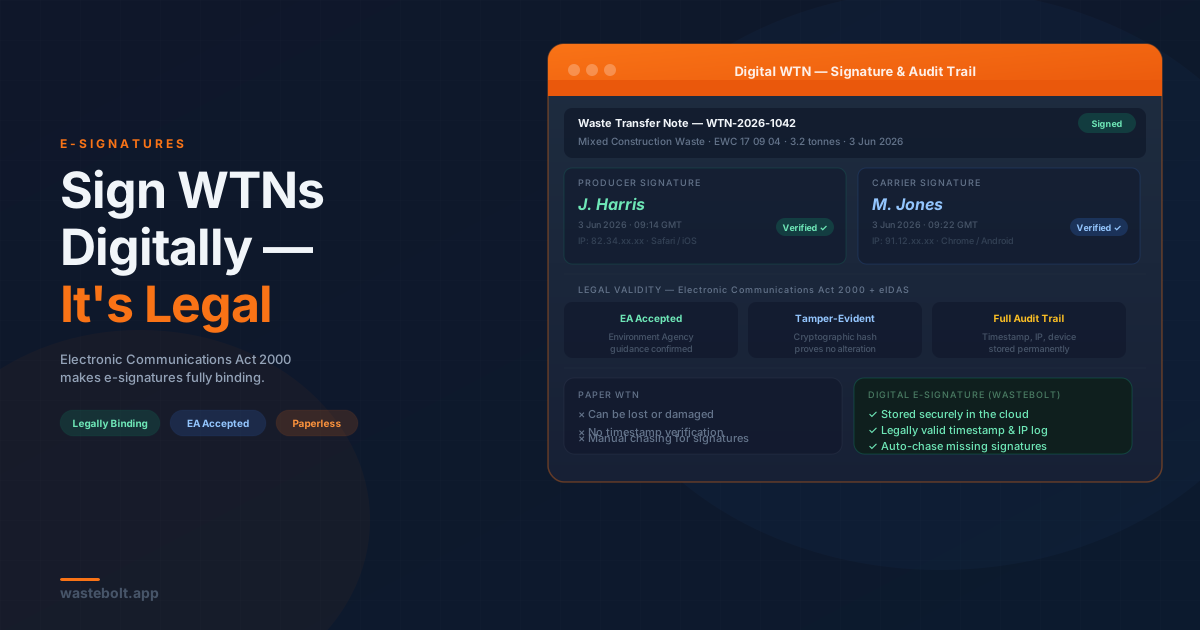
Yes — electronic signatures on Waste Transfer Notes are fully legal in the UK. The Electronic Communications Act 2000 gives electronic signatures the same legal standing as handwritten ones, provided they meet certain requirements. The Environment Agency has confirmed it accepts digitally signed WTNs as compliant documentation.
The Legal Basis for E-Signatures on WTNs
Two pieces of legislation underpin the legality of digital signatures on waste documents:
Electronic Communications Act 2000 — establishes that an electronic signature is admissible as evidence in legal proceedings and has the same effect as a handwritten signature when it meets the appropriate requirements.
eIDAS Regulation (UK-retained post-Brexit) — sets out three tiers of electronic signature: Simple, Advanced, and Qualified. WTNs typically require a Simple or Advanced electronic signature.
The Environment Agency's technical guidance confirms that WTNs can be completed and stored digitally, and that electronic signatures satisfy the signing requirement under the Environmental Protection Act 1990 duty of care.
What Makes an E-Signature Valid on a WTN?
Not every click of "I agree" qualifies. For a digital signature on a WTN to be legally robust, it should:
1. Identify the signatory — the signature must be linked to the person signing. This can be as straightforward as the person typing their name, drawing their signature on a touchscreen, or clicking a dedicated signature button tied to their verified account.
2. Show clear intent to sign — the act of signing must be deliberate and unambiguous. A pop-up checkbox saying "by signing below you agree this WTN is accurate" satisfies this.
3. Be accompanied by an audit trail — a timestamp, IP address, and device record stored alongside the signature demonstrates when and where the document was signed. This is critical if the signature is ever challenged.
4. Be tamper-evident — the signed document should be locked so it cannot be altered after signing. Any change should be detectable.
What the Environment Agency Says
The EA's guidance on digital waste tracking and WTN compliance confirms that:
"Waste transfer notes may be completed and stored electronically, provided the information required by the regulations is captured and both parties can access a copy."
This means paper is no longer required. The WTN can be created, signed, and stored entirely digitally — as long as it contains all the required fields and both the producer and carrier have signed it.
The EA can request to see your WTNs during an inspection. A digital record stored in the cloud and accessible on demand satisfies this requirement just as well as a paper file — and is considerably harder to lose.
Advantages of E-Signatures Over Paper
| Paper WTN | Digital WTN with E-Signature | |
|---|---|---|
| Signature capture | Physical pen on paper | On-screen, via smartphone or desktop |
| Audit trail | None — date on paper only | Timestamp, IP address, device recorded |
| Tamper evidence | None | Cryptographic hash detects any change |
| Storage | Filing cabinet, can be lost or damaged | Secure cloud storage, 2-year retention automatic |
| Missing signatures | Chase by phone/email | Automatic reminder sent to carrier |
| EA inspection | Find and photocopy paper files | Instant digital access, searchable |
| Cost | Printing, postage, filing | Included in WasteBolt subscription |
When Is a Signature Actually Required?
Under the Environmental Protection Act 1990 (Duty of Care Regulations), a WTN must be signed by both the waste producer and the waste carrier before the waste is collected. The signature confirms that:
- The producer confirms the waste description is accurate
- The carrier confirms they are authorised to collect and transport the waste
Both parties must receive a copy of the signed WTN. With a digital system, both copies are created and stored automatically at the point of signing.
Season Tickets (annual WTNs covering regular movements between the same parties) also require signatures — but only once per year rather than per collection.
How WasteBolt Handles E-Signatures
WasteBolt captures e-signatures directly within the platform:
- The admin or driver creates the WTN with full details
- A signature request is sent to both parties
- Each party signs on-screen using a touchscreen or mouse — or a link is shared with the customer to sign remotely
- Both signatures are timestamped with the date, time, IP address and device
- The completed, signed WTN is stored in the cloud and accessible immediately
If a signature is missing — for example, the carrier forgot to get the customer to sign — WasteBolt flags it and can send an automatic reminder. The missing signature report shows every WTN that is outstanding, so nothing falls through the cracks.
What About Hazardous Waste?
The same rules apply to Hazardous Waste Consignment Notes (HWCNs). Digital signatures are accepted, subject to the same requirements for identification, intent, and audit trail. Given that HWCNs must be kept for 3 years rather than 2, and the regulatory scrutiny around hazardous waste is higher, a digital audit trail is arguably more important for HWCN compliance than for standard WTNs.
Frequently Asked Questions
Can the customer sign on their phone? Yes. WasteBolt generates a shareable link that the customer can open on their own device to sign. The signature is captured remotely and attached to the WTN with a full timestamp.
Do both parties need to sign at the same time? No. The producer typically signs first to confirm the waste description is accurate, and the carrier signs when they arrive to collect. Both signatures are timestamped individually.
What if the customer refuses to sign digitally? You can print the WTN and obtain a handwritten signature, then upload a photo of the signed document. WasteBolt stores both digital and scanned paper WTNs.
Is a typed name a valid e-signature? In most cases, yes — a typed name with a clear statement of intent and a timestamp can satisfy the e-signature requirement for a WTN. For maximum legal robustness, a drawn signature or a click-to-sign button linked to a verified account is preferable.
How long do digital WTN records need to be kept? The same as paper — 2 years for standard WTNs, 3 years for hazardous waste consignment notes. WasteBolt retains records automatically.