The Direct Answer
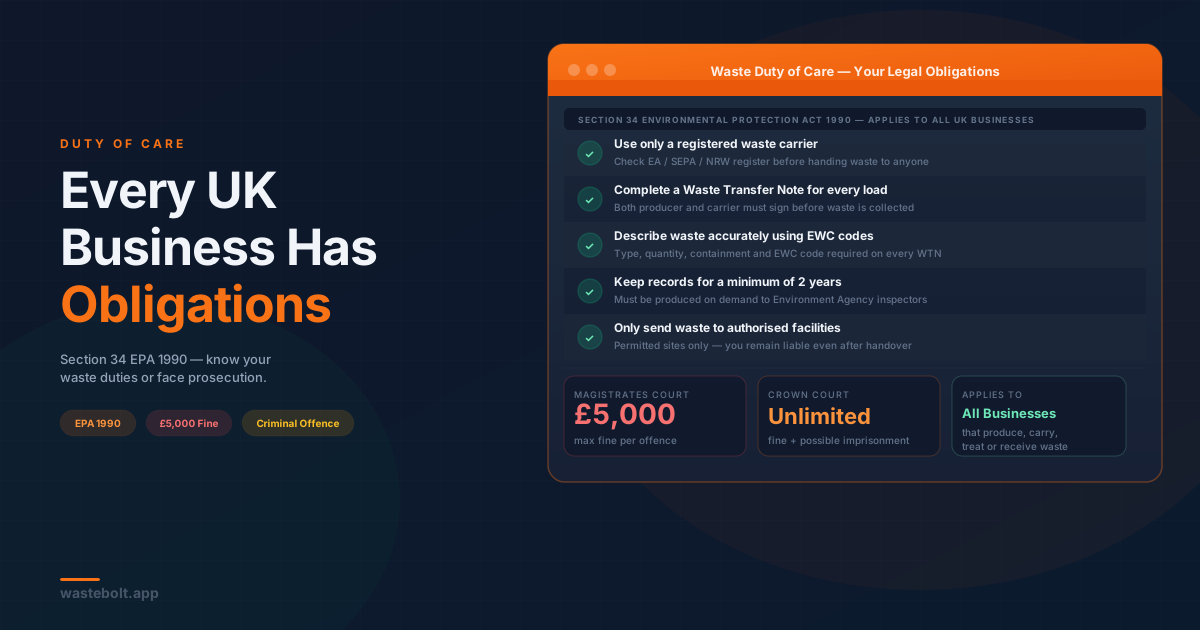
If your business produces, carries, treats or receives waste, you have a legal duty of care under Section 34 of the Environmental Protection Act 1990. It is not optional. It applies to virtually every UK business — from a sole trader booking a skip to a large manufacturer moving hundreds of tonnes a year.
Failing your duty of care is a criminal offence. Fines can reach £5,000 in the Magistrates Court, with no upper limit in the Crown Court. Imprisonment is also possible in serious cases.
What Are the Waste Duty of Care Regulations?
The waste duty of care regulations are set out in Section 34 of the Environmental Protection Act 1990 (EPA 1990), supported by the statutory Duty of Care Code of Practice issued by Defra. Together, these establish a legal duty that applies to anyone who handles controlled waste — the legal term covering almost all waste produced by businesses, households, and industry.
The duty of care regulations are enforced by the Environment Agency (EA) in England, the Natural Resources Body for Wales (NRW), and the Scottish Environment Protection Agency (SEPA) in Scotland. Northern Ireland has equivalent duty of care provisions under its own waste legislation.
In practice, the regulations require anyone in the waste chain to:
- Take reasonable steps to keep waste safe and prevent it escaping their control
- Ensure waste is only transferred to someone who is authorised to take it
- Provide a written description of the waste at the point of transfer
- Keep records of that transfer (normally a Waste Transfer Note)
The duty exists because waste is inherently risky to people and the environment, and the law places responsibility on everyone in the waste chain — not just waste management companies or carriers.
Who Does It Apply To?
The duty of care applies to you if your business:
- Produces waste — including offices, shops, construction sites, farms, restaurants, and any premises where business activity creates waste
- Carries waste — whether you're a registered waste carrier moving waste for a fee, or a business moving its own waste
- Treats waste — sorting, shredding, composting, or processing waste in any way
- Keeps waste — storing waste at a premises, even temporarily
- Receives waste — accepting waste from other businesses
Household waste is exempt — if you're an individual disposing of your own household waste, the duty of care does not apply to you personally. However, a house clearance company collecting that waste does have a duty of care.
How Duty of Care Applies to Controlled Waste
The waste duty of care under Section 34 applies specifically to controlled waste — a defined legal category that covers household, commercial, and industrial waste under the Controlled Waste Regulations 2012 and the Environmental Protection Act 1990.
In other words, "duty of care controlled waste" simply means: if the waste your business produces, stores, carries, or disposes of falls into the household, commercial, or industrial categories — which covers the vast majority of everyday business waste — the duty of care applies to it. This includes:
- General office and commercial waste (paper, packaging, food waste, mixed recyclables)
- Construction and demolition waste
- Industrial process waste
- Waste oils, chemicals, and other hazardous controlled waste (subject to additional rules — see below)
A small number of waste streams sit outside the controlled waste definition (for example, certain agricultural and mining wastes have separate regimes), but for almost any UK business, if it's waste, it's controlled waste, and the duty of care applies. When in doubt, treat your waste as controlled waste and follow the duty of care steps below.
Commercial Waste Duty of Care: What Businesses Must Do
For commercial waste — the waste produced by shops, offices, hospitality venues, construction sites, and other businesses — the duty of care translates into five practical requirements.
1. Only Use a Registered Waste Carrier
You must only hand waste to someone who is authorised to take it. This means checking that your waste carrier is registered with the Environment Agency (or SEPA / NRW).
You can check the public waste carrier register on the EA website. If you hand waste to an unregistered carrier and it ends up fly-tipped, you can be held liable even though you did not do the fly-tipping yourself.
2. Complete a Waste Transfer Note for Every Transfer
Every time waste changes hands, a Waste Transfer Note (WTN) must be completed and signed by both parties. The WTN must include:
- A description of the waste (what it is, how it's contained, how much)
- The EWC (European Waste Classification) code
- The name and address of both the producer and the carrier
- The date of transfer
- The carrier's registration number or exemption reference
- Signatures from both parties
A Season Ticket (annual WTN) can be used instead of individual notes if the same type of waste moves between the same parties on a regular basis.
3. Describe Waste Accurately
Vague descriptions like "general rubbish" or "mixed waste" are not compliant. You must use the correct EWC code and describe the waste in enough detail that someone could identify any risk it poses. If your waste includes hazardous materials, a Hazardous Waste Consignment Note is required instead of a standard WTN.
4. Keep Records for a Minimum of 2 Years
You must keep copies of all WTNs for at least 2 years from the date of transfer. The Environment Agency can request to see these records at any time. Failing to produce them is an offence in itself, separate from the original duty of care breach.
5. Only Send Waste to Authorised Facilities
The waste you transfer must end up at an authorised facility — a site with an environmental permit or registered exemption. You have a responsibility to take reasonable steps to check this. The fact that you handed the waste to a carrier does not remove your liability if it was ultimately disposed of illegally.
Completing the Duty of Care Section of a Waste Transfer Note
The "duty of care" element of a WTN isn't a single tickbox — it's effectively the whole document. A correctly completed WTN is your evidence of meeting the duty of care, which is why getting each section right matters.
When you fill in the duty of care waste transfer note, you (or your software) need to capture:
- Waste description — what the waste is, its physical form (e.g. loose, baled, drummed), and an estimate of quantity or weight.
- EWC code — the 6-digit code that classifies the waste. Use the EWC code list and search tool to find the correct code rather than guessing or reusing an old code that may not match.
- SIC code (where applicable) — the Standard Industrial Classification code for the waste producer's business activity.
- Producer and carrier details — full name, address, and the carrier's waste carrier registration number or registration exemption reference.
- Transfer details — the date and place of transfer.
- Signatures — from both the person transferring the waste and the person receiving it, confirming they accept the description is accurate.
For a complete, section-by-section breakdown of every part of the form (Parts A–E), see our Complete Guide to Waste Transfer Notes UK 2026.
Doing this on paper means re-entering the same information for every load and manually tracking signatures and retention. WasteBolt's digital WTN form pre-fills producer, carrier and EWC code details from previous transfers, and captures signatures electronically — so each duty of care record is complete and stored automatically.
What Happens If You Breach Your Duty of Care?
The consequences depend on the severity of the breach:
| Enforcement route | Potential outcome |
|---|---|
| Fixed Penalty Notice | Up to £300 on the spot |
| Magistrates Court | Fine up to £5,000 per offence |
| Crown Court | Unlimited fine, possible imprisonment |
| Civil liability | You may be required to pay remediation costs |
The EA has been increasingly active in pursuing duty of care breaches, particularly where waste ends up fly-tipped. They can trace waste back to the original producer using records and CCTV.
Common Duty of Care Mistakes
Using a man-and-van without checking their registration. Unregistered carriers are a common route for fly-tipping. If your waste is traced to a fly-tip and you can't produce a WTN, you face prosecution.
Keeping WTNs in a paper filing system that gets lost. The 2-year retention requirement is strict. Digital records stored securely in the cloud eliminate this risk.
Relying on verbal agreements. The duty of care requires a written, signed document — a verbal agreement provides no legal protection.
Accepting that the destination is "fine" without checking. You should verify that the receiving facility is permitted. A quick check of the EA's public register takes a minute.
Not getting both signatures before the waste leaves. The WTN must be signed before the waste is collected, not after.
Hazardous Waste: Additional Requirements
If your waste is hazardous (paints, solvents, asbestos, electrical equipment containing hazardous components), you have additional requirements:
- A Hazardous Waste Consignment Note (HWCN) is required instead of a WTN
- Pre-notification to the EA may be required for certain movements
- Records must be kept for 3 years rather than 2
- Your premises may need to be registered as a hazardous waste producer
How WasteBolt Helps You Meet Your Duty of Care
WasteBolt is built around helping businesses comply with their duty of care without the paperwork burden:
- Create legally compliant WTNs in under 60 seconds, with EWC codes selected from the built-in code list rather than typed manually
- E-signatures are captured from both producer and carrier
- Records are stored securely in the cloud — searchable and ready for EA inspection
- Season tickets automate recurring waste movements
- The carrier registration number is stored on every WTN automatically
- Digital Waste Tracking (DWT) submissions are handled directly from the same platform
For the full picture of what a compliant WTN needs to contain, read our Complete Guide to Waste Transfer Notes UK 2026. You always have a complete, auditable trail of your waste movements — exactly what the duty of care requires.
Frequently Asked Questions
Does the duty of care apply to small businesses? Yes. There is no size threshold. A sole trader, a small café, a two-person construction firm — all have the same duty of care as a large corporation.
What if I take my own waste to the tip? If you're taking your business's own waste to a licensed Household Waste Recycling Centre or commercial waste facility, you don't need a WTN for that movement — but the facility may require one. Check with the site.
Do I need a WTN if the carrier is a council collection service? No. Waste collected under a local authority waste collection arrangement is exempt from WTN requirements.
How long must I keep WTNs? Minimum 2 years from the date of transfer. 3 years for hazardous waste consignment notes.
What's the difference between controlled waste and commercial waste for duty of care purposes? "Controlled waste" is the legal category defined by the Controlled Waste Regulations 2012 and EPA 1990 — it covers household, commercial, and industrial waste. "Commercial waste" is one part of that category. In practice, almost all waste a business produces is both commercial waste and controlled waste, so the same duty of care obligations apply.
What information goes in the duty of care section of a waste transfer note? A waste description, the EWC code, the producer's and carrier's details (including the carrier's registration number), the date and location of transfer, and signatures from both parties. See the section above on completing the duty of care section of a WTN for a full breakdown.